Laser Marking, Laser Etching and Laser Engraving – What Are the Significant Differences?

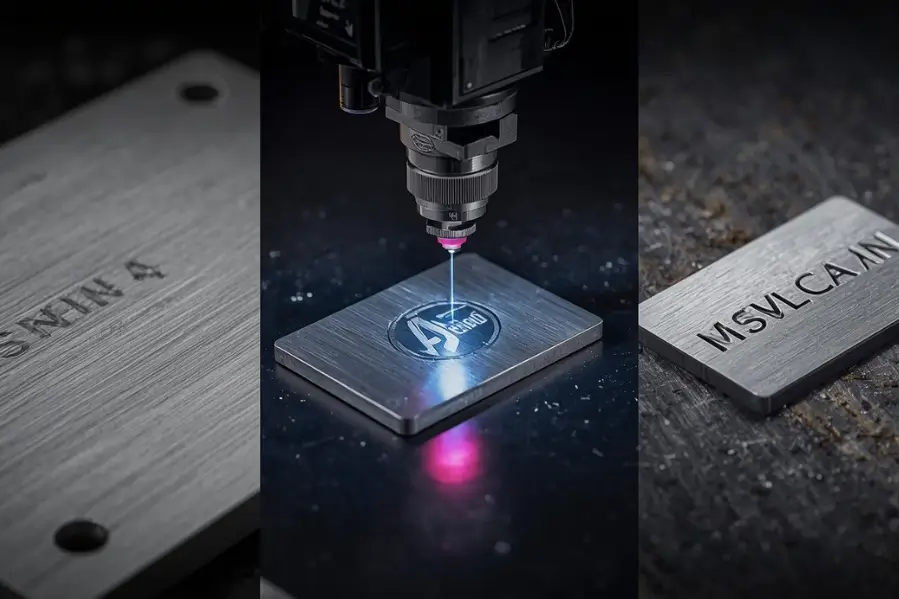
The terms laser marking, laser etching, and laser engraving are often used interchangeably. While they all use laser technology to create permanent marks on materials, they are actually different processes with distinct applications, results, and levels of material removal.
Understanding these differences is important for manufacturers, product designers, engravers, and businesses that want to choose the right method for branding, identification, customization, or industrial marking.
In this guide, we’ll explain how each process works, where it is used, and how to determine which method is best for your project.
Key Takeaways
- Laser marking, laser etching, and laser engraving are different processes that vary in depth, appearance, and material removal.
- Laser marking changes the surface appearance without significantly removing material, making it ideal for identification and traceability.
- Laser etching slightly melts the material surface to create high-contrast marks commonly used for branding and promotional products.
- Laser engraving removes material to create deeper, more durable markings that can often be felt by touch.
- Laser marking is typically the fastest process, while laser engraving provides the highest level of durability.
- The best method depends on factors such as material type, required durability, production speed, and desired appearance.
- Stainless steel, anodized aluminum, wood, acrylic, leather, and glass can all be marked, etched, or engraved depending on the application.
- Understanding the differences between these processes helps businesses choose the most effective solution for branding, identification, and customization.
What Is Laser Marking?
Laser marking is the broadest term used to describe any process that changes the appearance of a material using a laser.
Unlike engraving, laser marking does not typically remove significant amounts of material. Instead, it creates a visible mark through color change, oxidation, foaming, carbonization, or surface discoloration.
Common Uses of Laser Marking
- Serial numbers
- QR codes
- Barcodes
- Product identification
- Medical devices
- Electronics
- Automotive components
Benefits of Laser Marking
- Extremely fast
- Minimal material damage
- High precision
- Excellent for traceability
- Suitable for mass production
Because material removal is minimal, laser marking is often preferred when preserving the integrity of a product is important.
What Is Laser Etching?
Laser etching is a specific type of laser marking that slightly melts the surface of a material.
As the material melts and expands, it creates a raised mark that becomes visible and permanent.
Laser etching typically removes only a small amount of material, usually less than 0.001 inch deep.
Common Applications
- Product branding
- Company logos
- Promotional products
- Personalized gifts
- Drinkware
- Metal tags
Benefits of Laser Etching
- Fast processing speeds
- Excellent contrast
- High-quality appearance
- Minimal material removal
- Cost-effective production
Many branded products, tumblers, and promotional items use laser etching because it creates attractive, professional-looking marks without significantly altering the product.
What Is Laser Engraving?
Laser engraving removes material to create a deeper mark.
Unlike marking or etching, engraving physically cuts into the surface, producing visible depth that can often be felt by touch.
Depending on the material and settings, engraving depth can range from a few thousandths of an inch to significantly deeper cuts.
Common Applications
- Awards and plaques
- Nameplates
- Industrial parts
- Custom signage
- Jewelry
- Tools
- Firearm accessories
Benefits of Laser Engraving
- Permanent results
- Highly durable markings
- Excellent readability
- Greater depth
- Premium appearance
Engraving is often chosen when durability and long-term wear resistance are critical.
What Are the Main Differences Between Laser Marking, Etching, and Engraving?
The easiest way to understand these processes is by comparing how much material is affected.
Comparison Table
| Feature | Laser Marking | Laser Etching | Laser Engraving |
|---|---|---|---|
| Material Removal | Minimal | Very Light | Significant |
| Visible Depth | None | Slight | Noticeable |
| Processing Speed | Fastest | Fast | Slower |
| Durability | High | High | Highest |
| Surface Damage | Minimal | Low | Moderate |
| Best For | Identification | Branding | Permanent Marking |
| Tactile Feel | No | Slight | Yes |
This table highlights why different industries choose different laser processes based on their goals.
How Does Each Process Affect Material Surfaces?
The interaction between the laser and material differs significantly.
Laser Marking
Changes surface color or chemistry.
Examples:
- Black marking on stainless steel
- Color changes on plastics
- Oxidation markings on metals
Laser Etching
Melts and expands the material surface.
Results:
- High contrast
- Slight texture
- Shallow depth
Laser Engraving
Vaporizes material to create depth.
Results:
- Deep markings
- Physical texture
- Long-term durability
The deeper the process, the more resistant it becomes to wear and abrasion.
Which Materials Work Best for Each Process?
Different materials respond differently to laser energy.
Common Materials
| Material | Marking | Etching | Engraving |
|---|---|---|---|
| Stainless Steel | Excellent | Excellent | Excellent |
| Anodized Aluminum | Excellent | Excellent | Good |
| Wood | Good | Good | Excellent |
| Acrylic | Good | Moderate | Excellent |
| Leather | Good | Excellent | Moderate |
| Glass | Moderate | Excellent | Good |
Choosing the right process often depends on both the material and the desired result.
Which Process Is Best for Product Branding?
For most branding applications, laser etching is often the preferred choice.
Why Businesses Choose Laser Etching
- Professional appearance
- Strong contrast
- Fast production
- Minimal material damage
- Cost-effective scalability
Popular branded products include:
- Tumblers
- Water bottles
- Corporate gifts
- Promotional merchandise
- Electronics
Laser engraving may be selected when a deeper, more premium mark is desired.
Which Process Is Best for Industrial Identification?
Industrial environments often require permanent markings that withstand:
- Abrasion
- Chemicals
- Heat
- Weather exposure
For these applications:
- Laser marking is commonly used for traceability.
- Laser engraving is often used for long-term durability.
- Laser etching is frequently used for branded industrial products.
The correct choice depends on industry requirements and compliance standards.
What Factors Should You Consider When Choosing a Process?
Several factors influence the best method.
Consider These Questions
How Durable Must the Mark Be?
Deeper engravings generally provide the longest lifespan.
Is Speed Important?
Laser marking is typically the fastest process.
Is Product Appearance the Priority?
Laser etching often creates the most visually appealing branding.
Will the Product Experience Heavy Wear?
Laser engraving usually offers the greatest durability.
Answering these questions can help identify the most suitable process.
Ready to Choose the Right Laser Process?
Whether you’re creating branded products, industrial labels, promotional items, or custom gifts, understanding the differences between marking, etching, and engraving is essential for achieving the desired result.
At Thunder Laser USA, we provide professional laser systems, expert resources, and practical guidance to help businesses and creators produce high-quality markings and engravings across a wide range of materials.
Conclusion
Laser marking, laser etching, and laser engraving all serve different purposes. Laser marking focuses on surface-level identification, laser etching creates shallow but highly visible marks, and laser engraving removes material to create deep, durable markings.
By understanding how each process works and where it excels, you can choose the right solution for your specific project and achieve professional, long-lasting results.
Related Read
- How to Make a Laser Engraving File
- Which Materials Are Not Suitable for Laser Cutting and Engraving?
- What Is Dot Duration in Laser Engraving?
Frequently Asked Questions
What is the difference between laser marking and laser engraving?
Laser marking changes the surface appearance without significant material removal, while laser engraving removes material to create depth.
Is laser etching the same as laser engraving?
No. Laser etching creates shallow surface marks, whereas engraving removes more material and creates deeper markings.
Which process is best for logos?
Laser etching is often preferred for logos because it provides excellent contrast and a professional appearance.
Which method is most durable?
Laser engraving is generally the most durable because it creates deep, permanent markings.
Can all three processes be used on metal?
Yes. Stainless steel, aluminum, brass, and other metals can often be marked, etched, or engraved depending on the desired result.
Which process is fastest?
Laser marking is usually the fastest because it removes little or no material.
How do I choose between marking, etching, and engraving?
Consider factors such as durability, appearance, production speed, material type, and application requirements before selecting a process.