Leather Laser Engraving Ideas: Settings, Tips and PU Leather Guide

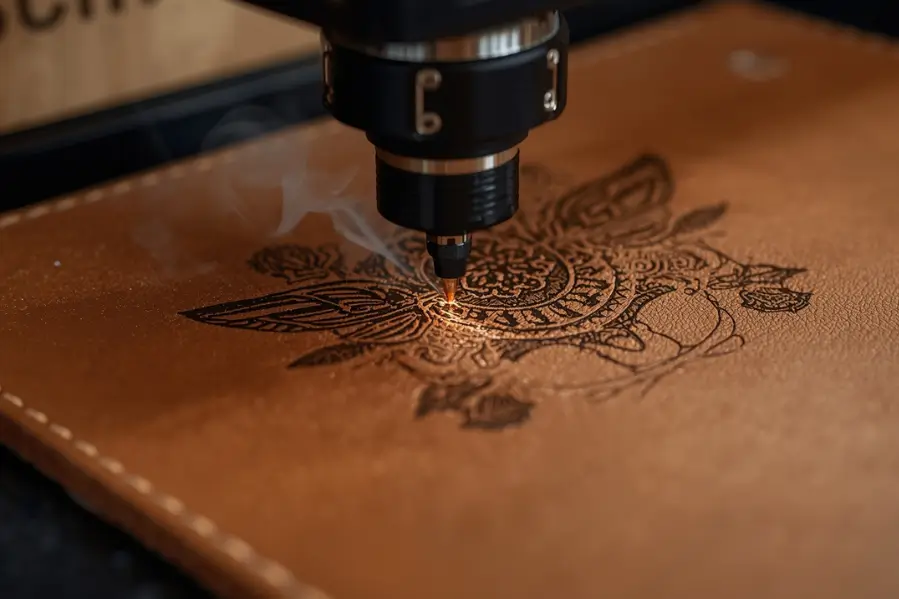
Leather has always been a symbol of quality, style and durability. Today, new technology makes it possible to personalize leather items in ways that were not possible before. Laser engraving allows precise customization that appeals to both businesses and individuals.
From wallets and belts to handbags and home decor, laser engraving has opened up new opportunities for creativity and personalization. As more people look for unique and meaningful products, this technique continues to grow in popularity.
Key Takeaways
- Laser engraving works best on vegetable tanned leather, but PU leather can also be engraved with caution
- Correct power, speed and frequency settings are critical to avoid burning or melting
- PU leather releases toxic fumes when engraved, so ventilation and safety measures are essential
- Engraved designs are permanent, making them ideal for gifts, branding and small business products
- Compared to stamping, laser engraving offers more detail, precision and scalability
What Are the Best Leather Laser Engraving Ideas?
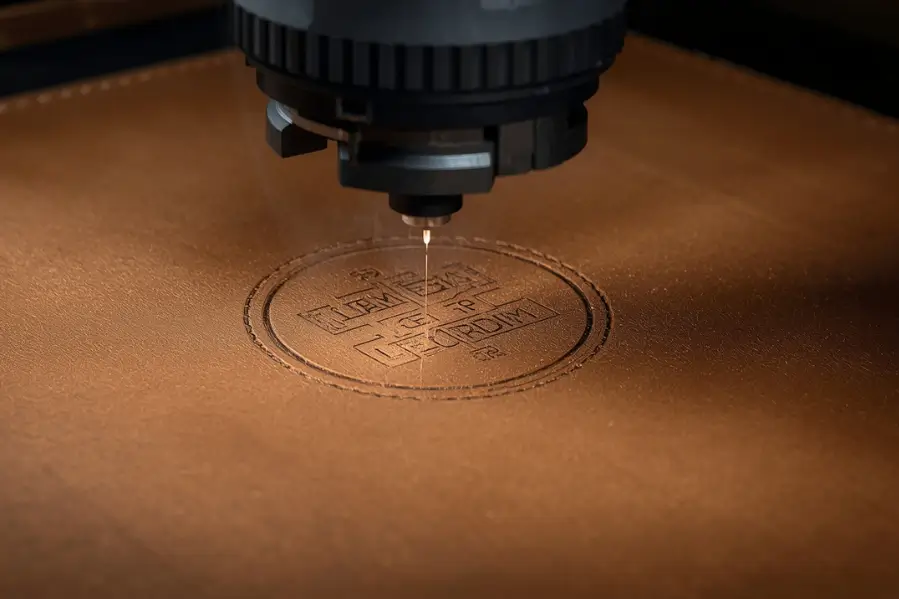
Here are some creative ways people use laser engravers on leather:
- Personalized gifts such as wallets, belts, journal covers or watch straps with initials or messages
- Corporate branding with engraved logos on cardholders, portfolios or office accessories
- Home décor like coasters, wall art and furniture accents
- Fashion and accessories including handbags, patches or shoes with engraved designs
- DIY crafts and small business products such as bookmarks, tags and ornaments
What Are the Recommended Laser Settings for Leather?
Laser settings vary depending on the type and thickness of leather. Too much power can burn or discolor the material, while too little will not engrave deeply enough. For a deeper dive into material settings, see our guide on laser engraving plastic where similar considerations about heat and safety apply.
| Setting | Natural Leather | PU (Synthetic) Leather | Notes |
|---|---|---|---|
| Power | 20–40% | 10–25% | Start low and test as leather darkens quickly |
| Speed | 200–400 mm/s | 300–500 mm/s | Faster speeds prevent burning |
| Frequency | 500–1000 Hz | 1000–2000 Hz | Higher frequency smooths edges |
| Focus | Standard | Slightly defocused | Defocus 1–2 mm on PU to avoid melting |
Always test on a scrap piece before engraving a finished product.
For more context, you might also compare results with laser engraving resin, which shares some of the same challenges around fumes and surface finish.
Can PU Leather Be Laser Engraved?
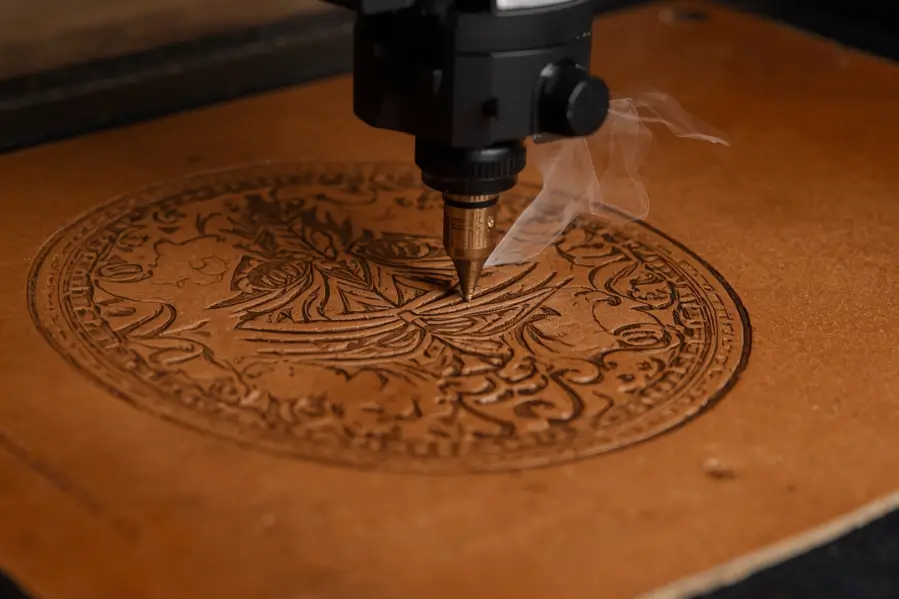
Yes, but with caution. PU leather is a synthetic material made by coating fabric with polyurethane. Like plastics, it can release harmful fumes, which makes it critical to have proper ventilation. If you want to learn more about the risks, read our detailed article on whether laser engravers are dangerous.
- Engraving results: PU leather can be engraved, but the surface often melts or discolors instead of burning cleanly
- Health hazards: Engraving PU releases toxic fumes, so a fume extractor is mandatory
- Quality issues: Designs may look less sharp than on natural leather, especially with small details
For best results and safety, vegetable tanned leather remains the preferred option.
What Are the Pros and Cons of Engraving Leather With a Laser?
Pros
- High precision for detailed logos and patterns
- Permanent results that resist fading
- Works on both soft and firm leathers
- Scalable for businesses producing in bulk
Cons
- Risk of burning or uneven engraving without proper settings
- PU and chrome tanned leathers release hazardous fumes
- Requires ventilation and regular machine maintenance
How Does Laser Engraving Compare to Traditional Leather Stamping?
| Feature | Laser Engraving | Leather Stamping |
|---|---|---|
| Detail level | Fine and precise including small text | Limited to larger, simpler designs |
| Durability | Permanent and resistant to wear | Can fade or wear down with use |
| Setup cost | Moderate with machine investment | Low for manual work |
| Scalability | Easy to mass produce | Slower and requires physical dies |
| Material flexibility | Works on many leather types | Best on vegetable tanned leather |
Laser engraving is the better choice for precision and customization, while stamping suits handmade or artisan aesthetics.
What Safety Precautions Should You Take?
- Ensure strong ventilation or use a fume extractor
- Wear protective glasses and gloves
- Avoid PVC based “leathers” as they are unsafe to engrave
- Clean lenses and mirrors regularly to prevent residue buildup
How Can Small Businesses Use Leather Laser Engraving to Grow?
Laser engraving allows small businesses to offer products that stand out in competitive markets. Personalized leather goods often sell at higher margins because they carry emotional value. For entrepreneurs looking beyond leather, explore our guide on laser engraving business ideas to discover profitable ways to expand.
According to Etsy trend reports, engraved and personalized gifts remain among the most popular product categories. Small businesses can:
- Offer initials or dates on leather items as an upsell
- Create seasonal or limited edition engraved designs
- Collaborate with local brands for co branded merchandise
- Add custom engraving as a service to existing product lines
For businesses expanding beyond leather, experimenting with materials like rubber engraving or resin engraving can open up new product categories.
Conclusion
Leather laser engraving has transformed how individuals and businesses personalize their products. From wallets and belts to coasters and décor, the ability to create precise, permanent designs has made laser technology one of the most reliable methods for working with leather. While PU leather can be engraved with caution, natural vegetable tanned leather remains the best option for clean, safe, and long lasting results.
With the right laser settings, proper safety precautions, and a bit of creativity, anyone can turn plain leather into unique pieces that carry real value.
Ready to Start Leather Engraving?
If you are looking for a powerful, reliable and easy to use machine for leather projects, explore the Thunder Laser range of CO₂ laser engravers. Designed for precision, safety and durability, Thunder Laser machines are trusted by crafters, small businesses and manufacturers around the world.
Check out Thunder Laser machines here and see which model fits your leather engraving needs.
FAQs About Leather Laser Engraving
What type of leather is best for laser engraving?
Vegetable-tanned leather is best for laser engraving because it engraves cleanly, produces crisp details, and is safe compared to PU or chrome-tanned leather.
Can a 20W laser cut leather?
Yes, a 20W laser can cut thin leather, but it works better for engraving. For thicker leather, a higher powered CO₂ laser is recommended for clean cuts.
How to seal leather after laser engraving?
You can seal leather after laser engraving by applying a leather finish or conditioner such as acrylic resolene, beeswax, or leather balm. This protects the design, reduces odor, and enhances durability.
How thick will a 6000 watt laser cut?
A 6000 watt laser can cut mild steel up to about 25 mm thick, stainless steel up to around 30 mm, and aluminum up to 20 mm, depending on material quality and cutting conditions.
Should you wet leather before laser engraving?
No, you should not wet leather before laser engraving. Moisture can cause uneven burns and damage the surface. It is best to engrave dry, clean leather for consistent results.