Can You Laser Engrave Tempered Glass?

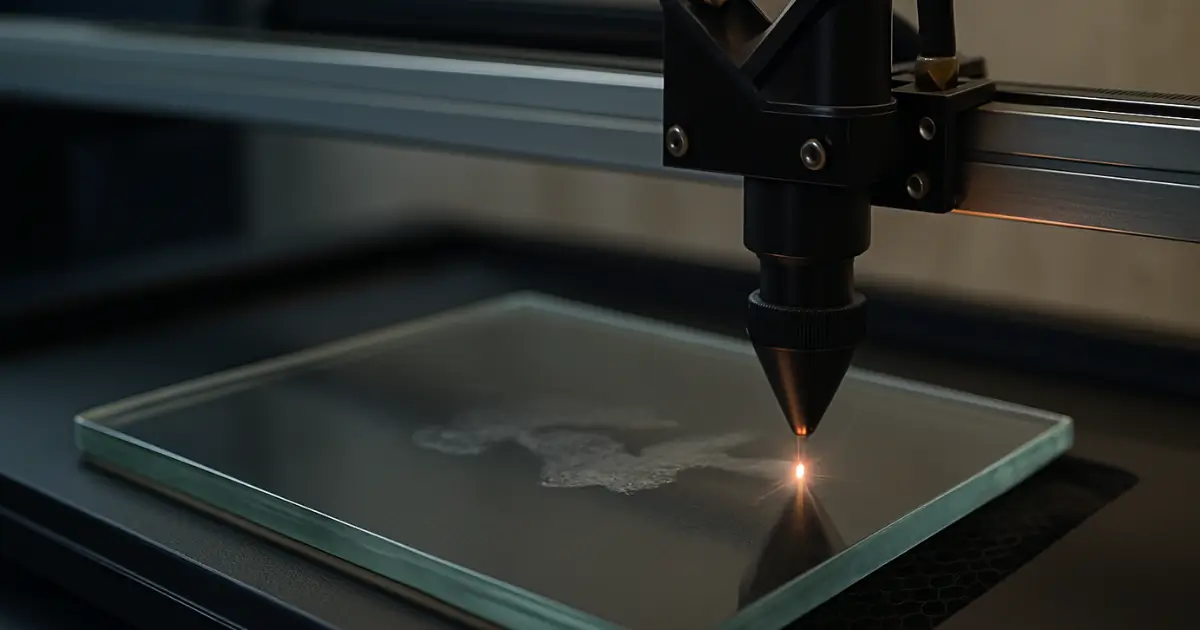
Laser engraving has become one of the most popular personalization techniques used today, from custom gifts to industrial labeling. But when it comes to tempered glass, a material designed to withstand heat, pressure, and impact, many people wonder whether laser engraving is actually possible. The answer is both yes and no, and understanding why is essential if you want clean, safe, and durable results.
This guide explains everything you need to know, including how laser engraving affects tempered glass, the techniques that work, the risks involved, and the alternatives professionals use.
Key Takeaways
- Tempered glass is fragile under localized heat: engraving often causes shattering due to internal stress and thermal shock.
- Direct laser engraving on tempered glass is generally not reliable; most experts recommend against it.
- The safest approach is to engrave before tempering or use alternative surface methods (coatings, decals, sandblasting) instead of direct engraving.
- If you attempt any engraving on tempered glass, use very low power, high speed, minimal dwell time, and protective masking, but accept the risk of breakage.
- Glass types matter: soda-lime or borosilicate glass engraves much more safely than tempered glass.
What Is Tempered Glass and Why Is It Hard to Engrave?
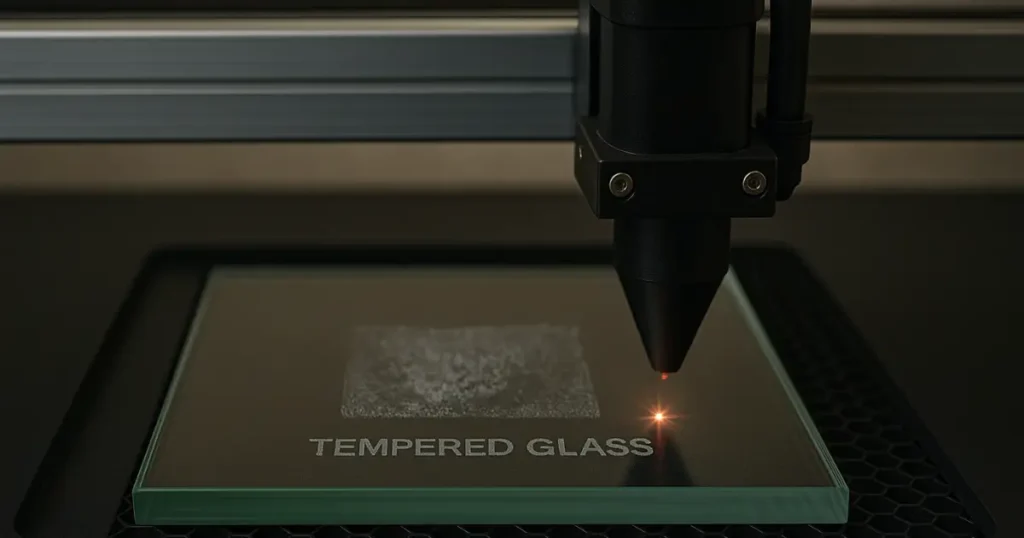
Tempered glass is a type of safety glass that undergoes high-temperature processing followed by rapid cooling. This creates internal stresses that make it four to five times stronger than standard glass.
Because of these internal stresses:
- It can shatter suddenly if heated unevenly.
- It reacts poorly to rapid temperature changes.
- High-energy engraving can cause explosive breakage.
Industry sources such as the Glass Association of North America (GANA) note that even small temperature differences across tempered glass can cause catastrophic failure. This sensitivity is also seen when engraving other heat-reactive materials such as silicone rubber, which requires special handling (see Thunder Laser USA’s guide on laser engraving silicone rubber for comparison).
Can You Laser Engrave Tempered Glass?
Short answer: Not reliably.
Most CO₂ lasers will cause tempered glass to shatter because:
- The laser heats spots of the surface rapidly,
- creating micro-fractures,
- which releases the internal stresses and causes the entire sheet to explode.
However, there are workarounds that some professionals use, such as:
- engraving before tempering,
- engraving with extremely low-power settings,
- using masking materials to diffuse heat,
- engraving around, not on, the glass surface (backing materials, coatings, etc.).
For example, if you’re evaluating a system like the Nova Plus 24 or similar CO₂ engraver, you must carefully consider the glass type before attempting tempered-glass work.
Still, the process is unpredictable, and most engraving experts (including laser manufacturers like Epilog and Glowforge) strongly advise against direct engraving on tempered glass unless you accept the risk of breakage.
Why Does Tempered Glass Break During Laser Engraving?
Tempered glass is always under internal tension. This tension keeps it strong, but it also makes the glass sensitive to sudden changes in temperature.
When a laser shines on one small spot of the glass, that spot heats up and expands. However, the rest of the glass remains cool and does not expand with it. This creates stress inside the glass. The stress builds up quickly until the glass suddenly cracks or even explodes into pieces.
This process is called thermal shock. It can happen even when using low laser power if the laser stays in one place for too long. Materials research from ASM International shows that tempered glass can break from temperature differences as small as 70 to 100 degrees Celsius. A laser can easily reach that level of heat in only a few seconds.
Are There Any Safe Methods to Engrave Tempered Glass?
There is no fully safe method, but here are the closest options.
Engraving Before Tempering
This is the most reliable technique. The glass is laser-engraved while still untreated, then placed through the tempering furnace. The engraving becomes permanently fused into the surface.
Pros:
- Zero risk of shattering during engraving
- Crisp, clean detail
- Industrial-level durability
Cons:
- Not suitable for one-off projects
- Requires access to a tempering facility
Using Extremely Low-Power Laser Settings
Some people attempt engraving with:
- 5–10% power
- High-speed passes
- Multiple layers of wet paper or tempering-compatible masking tape.
This diffuses heat and reduces stress. However, the result is inconsistent, and the glass can still shatter at any moment.
Engraving a Coating Instead of the Glass
A safe way to engrave tempered glass is to engrave a layer that sits on top of the glass instead of engraving the glass surface directly. For example, you can engrave:
• Paint
• Powder coating
• Ceramic ink
• A protective film applied to the glass
These materials absorb the laser energy so the glass itself does not heat up. This technique is similar to engraving resin where overheating can distort the material.
UV Laser Marking
UV lasers operate at 355 nm and interact differently with glass. They mark the surface by micro-etching, generating less heat than CO₂ lasers. This makes them a safer option, though still not guaranteed.
Comparison: Engraving Tempered Glass vs Regular Glass
| Feature | Regular Glass | Tempered Glass |
|---|---|---|
| Engraving Safety | Safe with CO₂ lasers | High risk of shattering |
| Heat Resistance | Moderate | Very high but uneven heating causes failure |
| Engraving Quality | Smooth, frosted finishes | Can be patchy or uneven |
| Best Method | Direct CO₂ engraving | Pre-tempering engraving or coating |
| Breakage Risk | Low | Very high |
What Are the Best Use Cases for Laser-Engraved Glass?
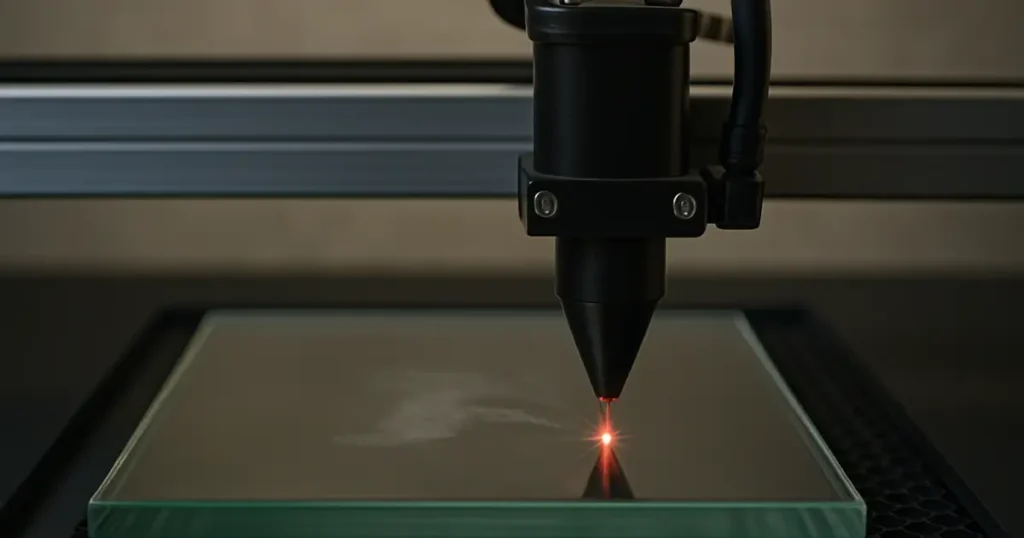
Even though tempered glass is tricky, laser engraving is widely used for other types of glass. Common applications include:
- Home décor (mirrors, plaques, frames)
- Custom gifts (wine glasses, awards)
- Art and craft projects
- Corporate branding on glass trophies
- Architectural glass panels (engraved before tempering)
For tempered glass specifically, the safest practical use is engraving before the tempering process.
What Should You Avoid When Engraving Tempered Glass?
To prevent accidents and equipment damage, avoid:
- Using high laser power
- Engraving in one spot repeatedly
- Removing masks while the glass is still warm
- Attempting large, solid fills (creates hot zones)
- Ignoring micro-cracks around the engraving site
Similar safety concerns appear when working with potentially hazardous materials. If you want a better understanding of the risks, see Are Laser Engravers Dangerous?
What Are the Pros and Cons of Laser Engraving Tempered Glass?
Pros
- Long-lasting mark if successful
- High precision
- Clean, chemical-free process
- Works well before tempering
Cons
- Extremely high risk of breakage
- Unpredictable results
- Not recommended by manufacturers
- Limited design options due to heat sensitivity
Are There Better Alternatives to Engraving Tempered Glass?
If your goal is personalization or branding, these alternatives are safer and more reliable:
Sandblasting
Creates smooth, frosted finishes without heating the glass. Common in high-end décor and commercial storefronts.
Chemical Etching
Uses etching creams containing ammonium bifluoride to lightly frost the glass surface.
Vinyl Decals
Aesthetic, removable, and safe. Ideal for signage and retail settings.
Ceramic Ink Printing
Common for architectural glass and phone screens. The design is printed, then baked into the glass during tempering.
How Do Professionals Engrave Tempered Glass Without Breaking It?
Professionals combine multiple techniques to minimize risk:
- Masking the surface with wet paper or dish soap
- Using low-power, high-speed settings
- Focusing slightly above the glass to reduce heat concentration
- Using chiller fans to cool the area
- Engraving in multiple light passes
- Limiting design density
Some shops refuse tempered-glass engraving altogether because of liability concerns.
Should You Try Engraving Tempered Glass at Home?
Only if you understand the risks. Hobby-grade lasers (like Glowforge, OMTech, or xTool) generally cannot safely engrave tempered glass and may void warranties if attempted.
If engraving is essential:
- Use standard, non-tempered glass
- Or send the design to a glass shop capable of pre-tempered engraving
For beginners, non-tempered glass produces better results with fewer safety concerns.
What You Should Do Next
If you’re planning to engrave glass safely and want consistent, high-quality results, your next step is choosing the right laser machine.
Thunder Laser USA offers reliable laser engravers that handle glass, coated glass, and other sensitive materials with better control and precision.
FAQs About Laser Engraving Tempered Glass
Can you laser engrave tempered glass with a CO₂ laser?
Not reliably. The glass often shatters due to heat-induced stress.
What happens if laser engraving gets too hot?
Local heating triggers thermal shock, which causes the entire sheet to explode.
Is UV laser engraving safer?
Yes, UV lasers generate less heat, but breakage can still occur.
Can you engrave tempered glass after it’s installed?
It’s not recommended and may damage the surrounding frame.
Can masking tape prevent breakage?
It can reduce heat concentration, but cannot fully eliminate the risk.
What type of glass is best for engraving?
Soda-lime, borosilicate, and standard non-tempered glass are the best options.
Can tempered glass be engraved before tempering?
Yes. This is the most reliable and industry-accepted method.