Laser Engraver Financing: Rates, Terms and Section 179
What financing a laser actually costs, the lease structure that changes your tax position, and why the 2026 rules make the first year cheaper than most buyers expect.

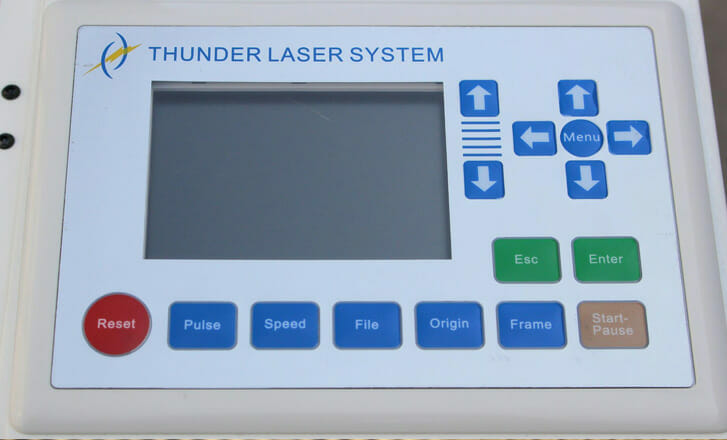
Most laser engravers are financed through an equipment loan or a lease-to-own agreement over 36 to 60 months, typically with little or no money down. Rates generally run 10 to 20 percent for established businesses and higher for start-ups or challenged credit, with some lenders approving scores as low as 500 on a soft credit check. The part most buyers miss is the tax side: a $1-buyout lease is treated as a purchase, which means you can finance the machine with nothing down and still deduct the full purchase price in year one under Section 179. For 2026 the deduction limit is $2,560,000, which is far above anything a laser costs.
Key takeaways
- Financing and the full tax deduction are not mutually exclusive. With a $1-buyout structure you can put nothing down, make three payments by December, and still deduct the entire purchase price for that tax year.
- The lease type decides the tax treatment. A $1-buyout lease is a purchase: you own and depreciate it. A fair market value lease is a rental: you deduct the payments instead. Those are different outcomes and nobody tells you at signing.
- The 2026 limits are not the constraint. Section 179 allows $2,560,000 and bonus depreciation is back at 100 percent permanently. No laser comes close. What limits you is your taxable income.
- December 31 is a placed-in-service deadline, not an order deadline. The machine has to be delivered and operational, not on a truck. Lead times matter more in Q4 than at any other point in the year.
- Rates are wide and mostly about credit. Equipment loans run roughly 10 to 20 percent. Lease-purchase programs for challenged credit can run 12 to 28 percent or higher. Both are normal; neither is a scam.
A laser engraver is a working asset that generates revenue, which puts it in a different category from most purchases a small shop makes. That is also why equipment financing exists and why most machines are bought with it rather than with cash.
The information around it is thin, though. Vendor pages say rates are competitive without stating them, and most articles on the subject skip the part that matters most, which is how the financing structure interacts with the tax deduction. This guide covers both with actual numbers.
What Financing a Laser Actually Costs
Monthly payments on common machine prices, across the rate range you are likely to be quoted. If you have not settled on a machine yet, our laser cutting machine cost guide covers what each class costs before financing enters the picture.
Machine Price | APR | 36 Months | 48 Months | 60 Months |
|---|---|---|---|---|
$5,000 | 12% | $166 | $132 | $111 |
$5,000 | 18% | $181 | $147 | $127 |
$5,000 | 12% | $166 | $132 | $111 |
$5,000 | 18% | $181 | $147 | $127 |
$15,000 | 12% | $498 | $395 | $334 |
$15,000 | 18% | $542 | $441 | $381 |
$25,000 | 12% | $830 | $658 | $556 |
$25,000 | 18% | $904 | $734 | $635 |
$40,000 | 12% | $1,329 | $1,053 | $890 |
$40,000 | 18% | $1,446 | $1,175 | $1,016 |
You will also see lower monthly figures advertised on machine pages, often labeled as low as. Those are usually quoted over a longer term, or they are a promotional introductory payment, and sometimes both. Neither is wrong, but compare like with like: ask what term produces the quoted figure and what the payment becomes once any promotional period ends.
Stretching the term lowers the payment and raises the total cost. A $25,000 machine at 18 percent costs about $7,500 in interest over 36 months and about $13,100 over 60. Whether that is worth it depends on whether the lower payment lets you take on work you otherwise could not.
The useful comparison is not against cash. It is against what the machine earns. A laser that bills $2,000 a month covers a $635 payment several times over, and the question becomes whether you can keep it busy rather than whether the rate is good.
Loan, Lease, or Payment Plan
An equipment loan is a straightforward borrow-and-repay. You own the machine from day one, it sits on your books as an asset, and you depreciate it. Typically 48 to 72 months, usually the lowest rates, and usually the strictest credit requirements.
A lease-to-own agreement is the most common route for laser buyers. You make monthly payments and own the machine at the end, usually for a nominal buyout. Terms run 12 to 60 months with 36 and 60 being the most common, little or no money down beyond first and last payment, and far more flexible credit requirements than a bank loan.
A fair market value lease has lower payments because you are not paying the machine off. At the end you return it, renew, or buy it at whatever it is then worth. Useful if you expect to upgrade, and a different tax treatment entirely.
Consumer-style payment plans such as Affirm or Shop Pay Installments appear on some vendor sites for lower-priced machines. They are quick and simple and are generally not structured as equipment finance, which means the tax treatment and the terms are different. Check before assuming.
The Structural Choice Nobody Explains: $1 Buyout vs FMV
The lease type determines whether you can take Section 179 at all. A $1-buyout lease, sometimes called a capital lease or lease-purchase, is treated by the IRS as a purchase. The machine is your asset, you depreciate it, and Section 179 applies to the full purchase price. A true fair market value lease is treated as a rental. You do not own the asset, you cannot depreciate it, and what you deduct instead is the lease payments as they are made. Both are legitimate. They produce completely different first-year outcomes, and the difference is decided at signing. |
For most laser buyers the $1-buyout structure is the right one, which is why around 95 percent of customers across the industry choose it. You want to own a machine you will run for a decade, and you want the deduction.
An FMV lease makes sense in narrower circumstances: when you expect the technology to move and want an upgrade path, when the lower payment is the binding constraint, or when your tax position means deducting payments as you go suits you better than a large first-year deduction. Your accountant can tell you which applies; the finance company cannot.
Section 179 in 2026
This is where most of the value sits and where most laser financing articles are years out of date.
Start with the current numbers. For tax years beginning in 2026, Section 179 allows a business to expense up to $2,560,000 of qualifying equipment. The deduction begins phasing out once total equipment purchases exceed $4,090,000 and is eliminated entirely at $6,650,000. Equipment must be placed in service by December 31, 2026.
Bonus depreciation is back at 100 percent and now permanent. The One Big Beautiful Bill Act restored full bonus depreciation for property acquired after January 19, 2025, with no sunset. Before that it had been phasing down, to 80 percent in 2023 and 60 percent in 2024, which is why older articles treat it as a disappearing benefit. It is not disappearing.
For a laser buyer, the cap is irrelevant. No laser engraver costs $2.56 million. The limit exists for businesses buying fleets of machinery, and you will never approach it. What actually constrains you is the taxable income limitation: a Section 179 deduction cannot exceed the taxable income from the active conduct of your business. If the business has not made money, there is nothing to deduct against.
Bonus depreciation covers that gap in part. Unlike Section 179, bonus depreciation is not limited by taxable income and can create a net operating loss that carries forward. The usual order is Section 179 first up to the income limit, then bonus depreciation on anything left.
Figures are current for tax years beginning in 2026 and come from published IRS limits. This is general information rather than tax advice, and your position depends on your business structure and income. Confirm with your CPA before relying on it.
The Argument That Makes Financing Worth It
Here is the piece that gets left out of almost every discussion of equipment financing, and it is the reason shops finance rather than save up.
A $1-buyout lease is treated as a purchase for tax purposes. That means you can put nothing down, make a handful of payments, and still deduct the entire purchase price in the year the machine goes into service.
Worked through with real numbers: a $25,000 machine financed over 60 months at 15 percent with nothing down comes to roughly $595 a month. Place it in service on 1 October and you will have made three payments, about $1,784, by 31 December. The Section 179 deduction available that year is the full $25,000. At a 24 percent effective rate that is a $6,000 reduction in tax owed.
Net cash position in year one: about $4,200 better off, having acquired a $25,000 machine. The tax saving exceeds the cash paid out. That is the whole argument, and it only works because the deduction attaches to the purchase rather than to the payments.
The caveats are real. You need the taxable income to deduct against, the machine has to be operational before year end, and you still owe the remaining 57 payments. This is a cash-flow advantage in year one, not free money. But it is why waiting until you can pay cash is usually the more expensive route.
The December 31 Deadline Is About Delivery, Not Ordering
Placed in service means installed and operational. A machine ordered on 20 December and delivered on 8 January is a next-year deduction. A machine delivered on 28 December and running is a this-year deduction. Signing a purchase order does not count.
This is why equipment dealers see a Q4 rush, and why lead times matter more in the fourth quarter than at any other point. If the deduction this tax year is part of your plan, work backwards from 31 December through delivery, installation and setup, and order accordingly.
Financing does not change the deadline. The deduction attaches to when the asset is placed in service, not to when it is paid for. That is the whole point.
Credit Requirements and What to Expect
Established businesses with good credit get the best terms: equipment loans at the lower end of the 10 to 20 percent range, longer terms, and minimal documentation on smaller amounts.
Start-ups and businesses under two years old are specifically catered for by equipment finance companies, which is a meaningful difference from bank lending. Expect a higher rate, possibly a larger down payment, and sometimes a personal guarantee.
Challenged credit is not a dead end. Lease-purchase programs exist that approve scores as low as 500, usually on a soft credit check that does not affect your score. Rates in that bracket typically run 12 to 28 percent or higher. That is expensive money, and it is still cheaper than not having the machine if the machine is earning.
Most applications use a soft credit check first. You can find out where you stand without a hard inquiry, which means there is little downside to applying early in your decision process rather than at the end.
How to Apply
1. Get a quote for the actual machine and configuration. Including rotary attachments, extraction, a chiller and shipping. Finance the whole working setup rather than just the machine, because a laser without extraction is not a laser you can use.
2. Submit a soft-check application. Most programs give an answer in minutes to a day on amounts under about $50,000, and smaller amounts often need nothing more than a one-page application.
3. Compare the structure, not just the payment. Ask specifically whether it is a $1-buyout or an FMV lease, what the total of payments comes to, whether there is an early buyout and at what discount, and what the documentation fee is.
4. Check the early payoff terms. Some agreements let you pay off early at a discount; others require all remaining payments regardless. If there is any chance of a good year, that clause is worth more than a point of rate.
5. Talk to your accountant before signing, not after. The lease structure decides your tax treatment and it cannot be changed afterwards. Ten minutes on the phone is worth a great deal here.
Mistakes Worth Avoiding
Financing only the machine is the first. Extraction, a chiller, a rotary, safety glasses and the right software are part of a working installation. Leaving them off the finance package means paying for them in cash at exactly the moment cash is tight.
Choosing a term by payment alone is the second. Stretching a $25,000 purchase from 36 to 60 months at 18 percent adds roughly $5,600 in interest. Sometimes that is the right call. It should be a decision rather than a default.
Signing an FMV lease while planning to keep the machine is the third. You will pay again at the end for something you have already largely paid for, and you will have given up the Section 179 deduction on the way.
Buying underpowered to hit a payment is the fourth. A machine that cannot do the work you are financing it for is the most expensive machine on the market. Buy for the work, then arrange the term around it.
And leaving the Q4 order too late. If the deduction matters this year, the machine has to be running by 31 December.
Financing a Thunder Laser
Our financing partner is Geneva Capital, a specialist equipment finance company that can customize terms and payment due dates rather than offering a fixed product. We also work with local banks and credit unions and can accept financing from nearly any lender you choose, which matters if you already have a banking relationship worth using. Our machines run from desktop fiber systems to large-format CO2 cutters, and prices start around $4,800. Ask what can be included in the agreement alongside the machine itself, since extraction and accessories are part of a working installation.
Every machine page shows an indicative monthly figure, and current terms, any running promotions and a quote request all live on our pricing and financing page. That is the fastest route to a real number for a specific machine, and it will always be more current than any article.
What is generally available: 100 percent financing with lease-to-own terms, zero-down options, deferred payment options, terms and payment dates that can be customized, and options for buyers with challenged credit. Around 95 percent of customers take the lease-to-own route so they own the machine outright at the end, which is the structure that keeps Section 179 available.
Every machine comes with US-based support and a two-year warranty, which matters more than it sounds when you are financing a production asset for five years. Tell us what you want to make and we will quote the machine and the financing together.
The Short Version
Finance the whole working installation rather than just the machine, choose a $1-buyout structure unless your accountant tells you otherwise, and get the machine running before 31 December if the deduction matters this year.
The arithmetic is more favorable than most buyers expect. A $1-buyout lease lets you acquire a machine with nothing down and deduct the full price in year one, which in a profitable business can leave you cash-positive in the first year on a purchase you have barely started paying for.
What it cannot do is make an underused machine pay for itself. Work out what the laser will produce before you work out how to pay for it. If you are still deciding which machine, our free materials library shows what these machines actually do across 22 materials, or book a demo and watch one run your parts before you arrange anything.
Frequently asked questions
Can you finance a laser engraver?
Yes, and most buyers do. Equipment loans and lease-to-own agreements are the two main routes, typically over 36 to 60 months with little or no money down. Equipment finance companies are generally more flexible than banks, including for start-ups and buyers with imperfect credit.
Can I take Section 179 on a financed laser?
Yes, provided the agreement is a $1-buyout or capital lease rather than a fair market value lease. The IRS treats a $1-buyout as a purchase, so the full price is deductible in the year the machine is placed in service, even though you have only made a few payments. Confirm your specific structure with your accountant.
What is the Section 179 limit for 2026?
For tax years beginning in 2026, the maximum deduction is $2,560,000, phasing out above $4,090,000 of total equipment purchases and eliminated at $6,650,000. Bonus depreciation is at 100 percent and now permanent. For a laser buyer the cap is academic; the binding constraint is your taxable income.
What credit score do I need to finance a laser engraver?
It varies widely. Established businesses with good credit get the best rates on equipment loans. Lease-purchase programs exist that approve scores as low as 500 on a soft credit check, usually at 12 to 28 percent or higher. Most applications start with a soft check, so finding out where you stand costs nothing.
Should I lease or buy a laser engraver?
If you will run the machine for years and want to own it, a $1-buyout lease or equipment loan is the usual answer and keeps Section 179 available. A fair market value lease makes sense if you want the lowest payment or expect to upgrade within a few years, but you give up ownership and the first-year deduction.
What interest rate should I expect?
Roughly 10 to 20 percent for equipment loans and leases to established businesses, and 12 to 28 percent or higher for lease-purchase programs serving challenged credit. Rates below 10 percent generally mean bank lending with stricter requirements and a slower process.
Can a start-up finance a laser engraver?
Yes. Equipment finance companies specifically serve businesses under two years old, which is one of the main differences from bank lending. Expect a higher rate, possibly a down payment, and often a personal guarantee.
Do I need to put money down?
Usually very little. Most lease-to-own programs require first and last month's payment rather than a traditional down payment, and zero-down options are common. Start-ups and challenged credit may be asked for more.
Does the machine have to be delivered before December 31 for the deduction?
Yes. Section 179 applies to equipment placed in service during the tax year, meaning delivered, installed and operational. An order placed in December but delivered in January is a next-year deduction, which is why lead times matter so much in the fourth quarter.
Can I pay the financing off early?
It depends on the agreement. Some include an early buyout at a discount; others require all remaining payments regardless of when you pay. Ask before signing, because this clause is often worth more than a point of interest rate.