Sand Carving vs Laser Etching Glass – Which Is Better for Precision, Cost, and Business?

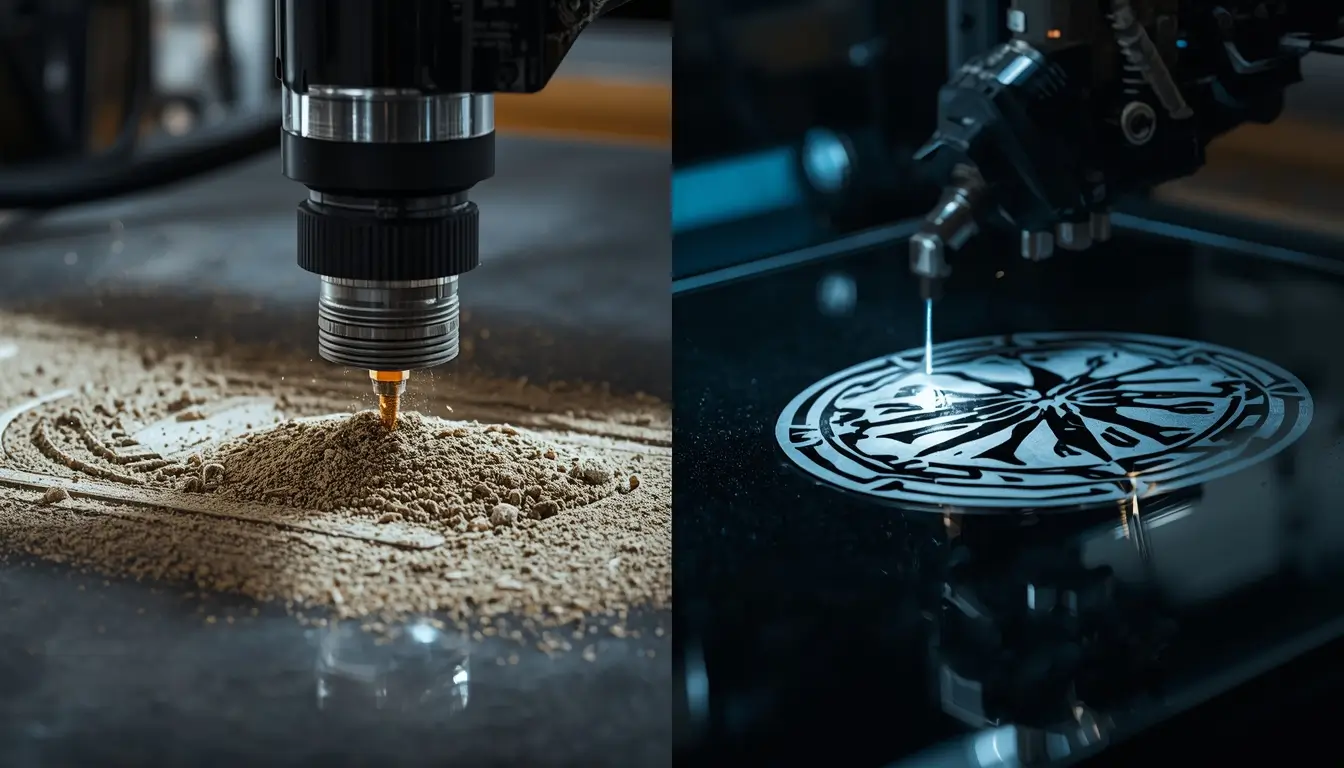
Glass customization is booming—from corporate awards to personalized gifts and architectural designs. But when it comes to etching glass, professionals often face one key decision:
Should you use sand carving (sandblasting) or laser etching?
The answer depends on your goals—depth vs precision, cost vs scalability, and manual vs automated workflows.
Both methods are widely used, but advances in laser technology have shifted the industry toward faster, cleaner, and more scalable solutions.
check out this video of the process:
What are the key differences between sand carving and laser etching?
| Feature | Sand Carving | Laser Etching |
|---|---|---|
| Process Type | Abrasive blasting | Light-based (laser) |
| Setup Time | High (masking required) | Low (digital file only) |
| Precision | Medium | Very high |
| Depth | Deep (3D carving possible) | Surface-level etching |
| Cleanup | Messy (abrasives) | Minimal |
| Repeatability | Difficult | Easy (automated) |
| Cost per job | Higher (materials + labor) | Lower (after setup) |
| Scalability | Limited | Highly scalable |
Bottom line:
- Choose sand carving for deep, artistic, 3D designs
- Choose laser etching for precision, speed, and scalability
Is laser etching better than sand carving?
In many modern applications—yes.
Why is laser etching often preferred?
1. Does laser etching eliminate masking?
Yes. Unlike sand carving, laser etching:
- Requires no stencil or vinyl masking
- Reduces setup time significantly
- Eliminates manual preparation errors
In your original content , masking was highlighted as one of the most time-consuming steps in sand carving.
2. Is laser etching faster?
Yes—much faster.
With laser machines:
- Designs are sent directly from computer to machine
- No physical setup required
- Multiple items can be processed quickly
This makes it ideal for:
- Bulk orders
- E-commerce businesses
- Production environments
3. Is laser etching cleaner than sand carving?
Yes.
Laser systems:
- Produce minimal debris
- Require little cleanup
- Operate in enclosed environments
In contrast, sand carving:
- Uses abrasive materials
- Requires cleanup and dust control systems
4. Is laser engraving easier to scale?
Absolutely.
With laser engraving:
- You can replicate designs instantly
- No need to recreate stencils
- Just reload the material and re-run the file
This makes it perfect for:
- Corporate branding
- Product customization businesses
- High-volume production
When should you choose sand carving instead?
Despite the advantages of lasers, sand carving still has a place.
Sand carving is better when you need:
- Deep, 3D engraved effects
- Sculpted or layered designs
- Artistic, handcrafted finishes
- Thick glass carving
Many high-end glass artists still prefer sand carving for its depth and tactile feel.
What are the pros and cons of each method?
Sand Carving
Pros:
- Deep engraving capability
- Unique 3D textures
- Ideal for artistic work
Cons:
- Time-consuming setup
- Requires masking materials
- Messy process
- Hard to scale
Laser Etching
Pros:
- High precision and detail
- Fast and efficient
- Easy to replicate designs
- Clean process
Cons:
- Limited depth
- Initial machine investment
- Requires software knowledge
Which method is more cost-effective?
| Cost Factor | Sand Carving | Laser Etching |
|---|---|---|
| Equipment | Moderate | Higher upfront |
| Materials | High (vinyl, abrasives) | Low |
| Labor | High | Low |
| Maintenance | Medium | Medium |
| Long-term ROI | Moderate | High |
According to automation insights from Deloitte, digital manufacturing tools like laser systems significantly reduce operational costs over time.
Which method is better for business and scalability?
Laser etching clearly wins for most businesses.
Why?
- Faster turnaround times
- Lower labor costs
- Easier training
- Consistent output quality
Best business use cases for laser etching:
- Custom glassware businesses
- Corporate gift suppliers
- Online stores (Etsy, Shopify)
- Industrial labeling
How versatile are laser engraving machines?
Laser machines are not limited to glass.
They can also work on:
- Wood
- Acrylic
- Leather
- Metal (with coatings)
- Plastics
This makes them a multi-purpose investment, not just a single-use tool.
What should you consider before choosing a method?
Ask yourself:
1. What type of design do you need?
- Deep, artistic → Sand carving
- Fine detail, logos → Laser etching
2. What is your production volume?
- Low volume → Either works
- High volume → Laser is better
3. What is your budget?
- Lower upfront → Sand carving
- Higher ROI → Laser
Final Verdict: Sand Carving vs Laser Etching
Both methods have their place—but the industry is clearly shifting.
Choose sand carving if:
- You need depth and texture
- You’re doing artistic or specialty work
Choose laser etching if:
- You want speed, precision, and scalability
- You’re running a business or production setup
Related Read: