

Silicone rubber is everywhere, from phone cases and kitchen tools to industrial seals and medical devices. With the rise of customization and branding, a common question arises: can you laser engrave silicone?
The short answer is yes. Silicone rubber can be laser engraved to create detailed, permanent, and high contrast marks. This makes it useful for personalization, logos, serial numbers, or decorative designs. But not all silicone is created equal, and engraving results depend on the type of silicone, its color, and the laser settings you use.
Key Takeaways
- Yes, you can laser engrave silicone rubber for permanent and detailed marks
- CO₂ lasers work best, while diode lasers can work for hobby use
- Dark silicone colors produce the best results
- Applications range from branding to medical to consumer products
- Safety and ventilation are essential due to fumes and soot
Can You Laser Engrave Silicone Rubber?
Yes, silicone rubber can be laser engraved. The process uses a laser beam to vaporize the top layer of the silicone, leaving behind a permanent indentation or a contrasting mark.
- CO₂ lasers are the most common choice because they interact well with non metallic materials like silicone
- Diode lasers with higher power can also work, though results are often less consistent
- Fiber lasers are generally not suitable since they are optimized for metals
When done correctly, engraving silicone produces clear, long lasting designs without the need for chemicals, paints, or stickers.
How Does Laser Engraving Work on Silicone?
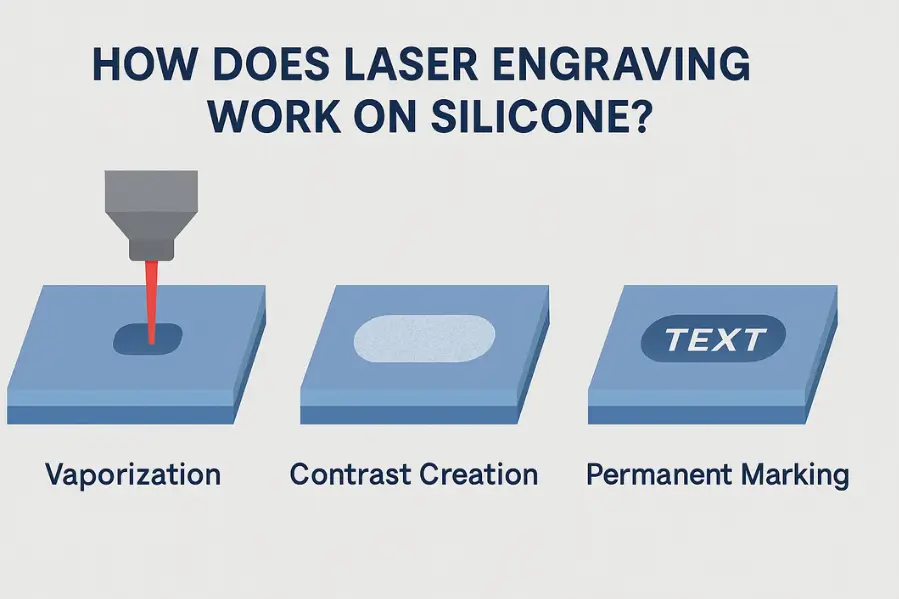
Laser engraving works by applying concentrated heat to the surface of silicone rubber.
- Vaporization: The laser beam removes material by vaporizing the top layer.
- Contrast creation: Depending on the silicone’s color and composition, engraving may expose a lighter underlying layer or create a frosted effect.
- Permanent marking: Unlike ink or paint, the mark does not fade or wash off.
| Laser Type | Works on Silicone? | Best Use Case |
|---|---|---|
| CO₂ Laser | Excellent | Industrial parts, phone cases, wristbands |
| Diode Laser | Limited | Small crafts, hobby projects |
| Fiber Laser | Not ideal | Rarely effective on silicone |
What Are the Benefits of Laser Engraving Silicone?
Laser engraving silicone rubber offers several important advantages:
- Durability: The marks are permanent and can resist rubbing, water, and chemicals.
- Precision: Complex logos, QR codes, or fine text can be engraved with sharp detail.
- Customization: Ideal for personalizing consumer goods such as phone covers or medical ID bands.
- Non contact process: The laser does not physically touch the silicone, which helps prevent mechanical wear.
- Eco friendly: The process requires no ink, solvents, or chemical etching.
What Are the Drawbacks of Engraving Silicone?
While effective, laser engraving silicone does have some challenges:
- Color limitations: Engraving light colored silicone may produce low contrast, making the mark harder to see.
- Soot and residue: Certain grades of silicone can create black residue or burnt edges during engraving.
- Material differences: Food grade and industrial silicone may react differently under the laser.
- Limited depth: Deep cuts can distort or weaken flexible silicone parts.
What Are the Best Applications of Laser Engraving Silicone?
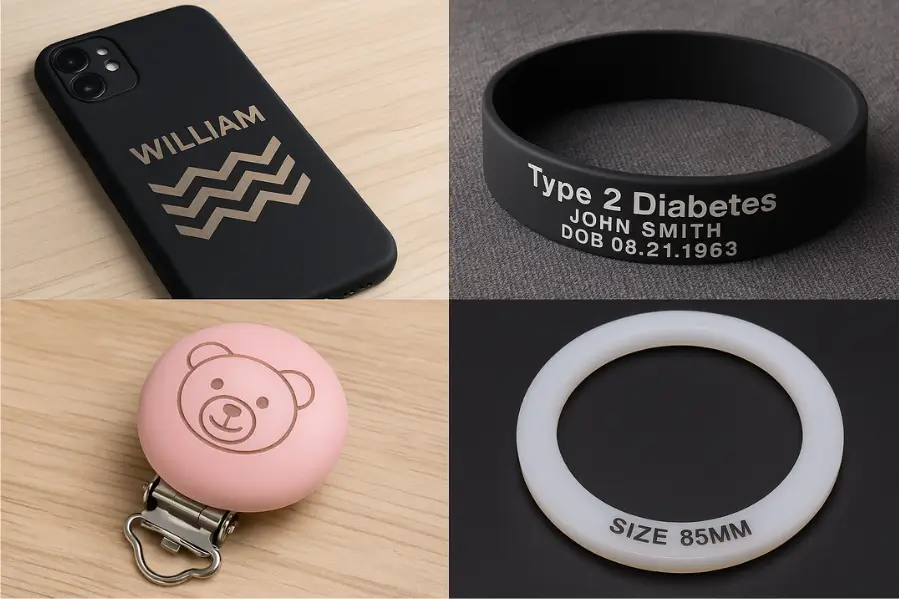
Laser engraved silicone is popular in many industries:
- Consumer products: Phone cases, wristbands, kitchen utensils, and baby products such as pacifier clips are some of the most common uses. Engraving on silicone is part of a wider trend where makers also work with other flexible materials like leather to produce unique, customized items.
- Branding and marketing: Company logos on silicone giveaways, promotional wristbands, and packaging stamps allow businesses to add affordable yet professional looking branding.
- Industrial and medical: Gaskets and seals marked with part numbers, medical ID bands, and device labels for traceability are reliable applications where durability is essential.
Tips for Successful Laser Engraving on Silicone
To get the best results, follow these guidelines:
- Choose dark silicone since dark colors engrave with better contrast
- Adjust power and speed carefully since too much power burns the silicone and too little will not mark it
- Use one pass instead of multiple passes to prevent burning or warping
- Always ensure good ventilation to remove fumes
- Clean the engraved area with soap and water to remove soot
Silicone Laser Engraving vs Other Materials
How does silicone compare to other rubbers and plastics? Many users also experiment with materials that share similar engraving challenges.
| Material | Laser Engraving Suitability | Notes |
|---|---|---|
| Silicone Rubber | Good | Needs testing for best results, dark silicone preferred |
| Natural Rubber | Excellent | Common for rubber stamps and gaskets. Learn more in our guide on engraving rubber |
| ABS Plastic | Limited | Can release toxic fumes, requires caution. For a detailed breakdown, see engraving plastic |
| Polycarbonate | Limited | Often discolors or warps |
| Acrylic | Very Good | Produces clean engravings and cuts |
Safety Considerations When Engraving Silicone
Silicone itself is considered non toxic, but engraving may release smoke, soot, and trace compounds. Always:
- Use a fume extractor or strong ventilation
- Avoid engraving in small, enclosed spaces
- Clean the engraved product before consumer use, especially for kitchen or baby items
These same safety practices apply to other materials too. For example, engraving resin requires strong ventilation because fumes can build up quickly, and cleaning afterward is just as important.
Real World Examples of Silicone Engraving
- Phone case branding: Sellers often engrave silicone cases with names, patterns, or quotes.
- Medical use: Hospitals engrave silicone wristbands with patient information to ensure durability.
- Industrial gaskets: Manufacturers mark silicone seals with size codes and production dates for easier tracking.
Conclusion
Laser engraving silicone rubber is a powerful way to create durable, precise, and permanent markings for consumer products, industrial components, and medical devices. With the right laser type, proper settings, and safety precautions, silicone can be transformed into a fully customizable and professional looking material.
Ready to try it yourself? If you want to explore professional grade machines that make silicone engraving easier and cleaner, check out our range of CO₂ laser engravers.
FAQs on Laser Engraving Silicone
How to engrave silicone rubber?
To engrave silicone rubber, use a CO₂ laser with moderate power and speed, work on dark silicone for better contrast, and clean the surface afterward to remove residue.
Is it safe to laser silicone?
Yes, it is safe to laser silicone as long as you use proper ventilation and clean the engraved surface to remove any soot or residue.
What are the disadvantages of silicone rubber?
Silicone rubber can be expensive, less tear resistant than other rubbers, and may have lower tensile strength, making it unsuitable for heavy load applications.
What rubber can you laser cut?
You can laser cut natural rubber, silicone rubber, and some synthetic rubbers that are free of chlorine, while avoiding materials like PVC that release toxic fumes.
Why is silicone rubber so expensive?
Silicone rubber is expensive because it requires complex manufacturing, uses high quality raw materials, and offers unique properties such as heat resistance, flexibility, and durability that cheaper rubbers cannot match.
Does laser engraving damage silicone?
If settings are too high, it may burn or distort the surface. Proper calibration prevents this.
Can I engrave clear or white silicone?
Yes, but results may lack contrast. Adding color filling methods such as paint rub in can improve visibility.
How do you clean engraved silicone?
Use mild soap and water with a soft cloth or brush to remove residue and soot.