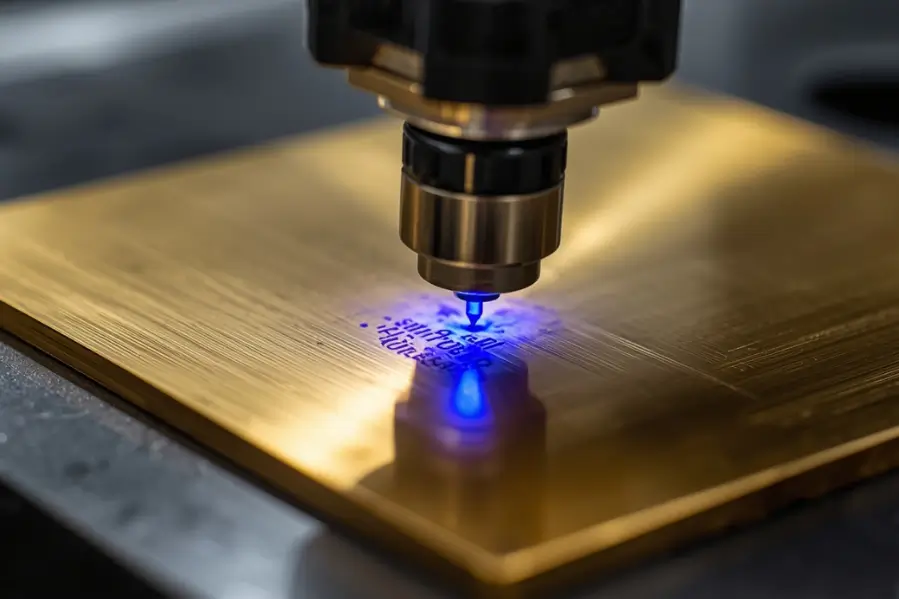

Brass is often chosen for premium looking products like plaques, tags, hardware, and decorative components. Its gold like finish makes it attractive, but that same surface causes confusion when it comes to laser engraving. Many people assume that if a diode laser can engrave aluminum, it should engrave brass the same way.
That assumption leads to frustration.
This guide explains what actually happens when a diode laser meets brass, what results are realistic, and how professionals successfully mark brass using desktop laser machines.
How does brass react to a diode laser beam?
Brass reflects a large portion of the light produced by diode lasers and spreads heat extremely fast. Because of this, most of the laser energy never stays concentrated long enough to remove brass material.
Instead of engraving, the laser energy is scattered or dissipated across the surface.
This is why raw brass behaves very differently from materials like wood, leather, or anodized metals.
What happens if you try to engrave untreated brass?
When a diode laser is used directly on bare brass, the results are usually disappointing.
Most users see
- Very faint marks
- Poor visibility under normal lighting
- No depth or texture change
Even increasing power and slowing speeds rarely improves the outcome in a meaningful way.
For practical purposes, direct diode laser engraving on raw brass is not effective.
Why marking brass is different from engraving brass
With diode lasers, brass is not engraved in the traditional sense. Instead, it is marked.
Marking means creating contrast on the surface without removing metal. This distinction is important because it explains why coatings and sprays are required.
Once you understand this difference, brass becomes much easier to work with.
What is the most reliable way to mark brass with a diode laser?
The most reliable method is using a laser marking compound or spray.
These products create a coating that absorbs laser energy efficiently. When heated by the diode laser, the compound bonds permanently to the brass surface, forming a dark, high contrast mark.
The brass itself remains intact.
Why laser marking sprays work on brass
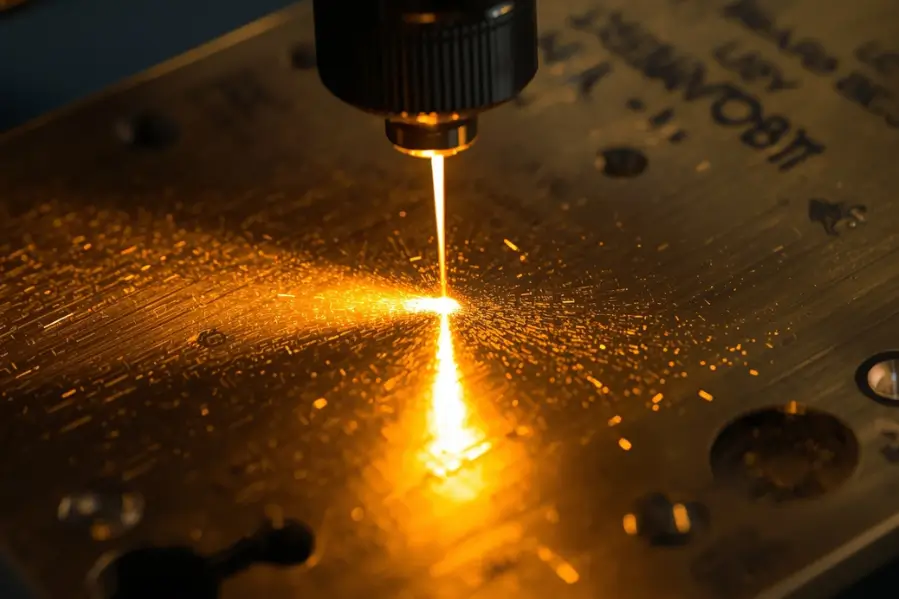
Laser marking sprays solve the reflectivity problem.
They absorb laser energy that brass would normally reflect. This allows the laser to create a permanent bonded mark without cutting the metal.
This technique is widely used in
- Product branding
- Industrial labeling
- Decorative brass signage
- Identification tags
The result is consistent and professional when applied correctly.
Can coated or finished brass be engraved more easily?
Yes.
Brass that has a surface treatment behaves differently under a diode laser.
Examples include
- Painted brass
- Lacquer sealed brass
- Oxidized or blackened brass
In these cases, the laser removes or alters the coating rather than the brass itself, producing much better visual contrast.
Does diode laser wattage matter for brass?
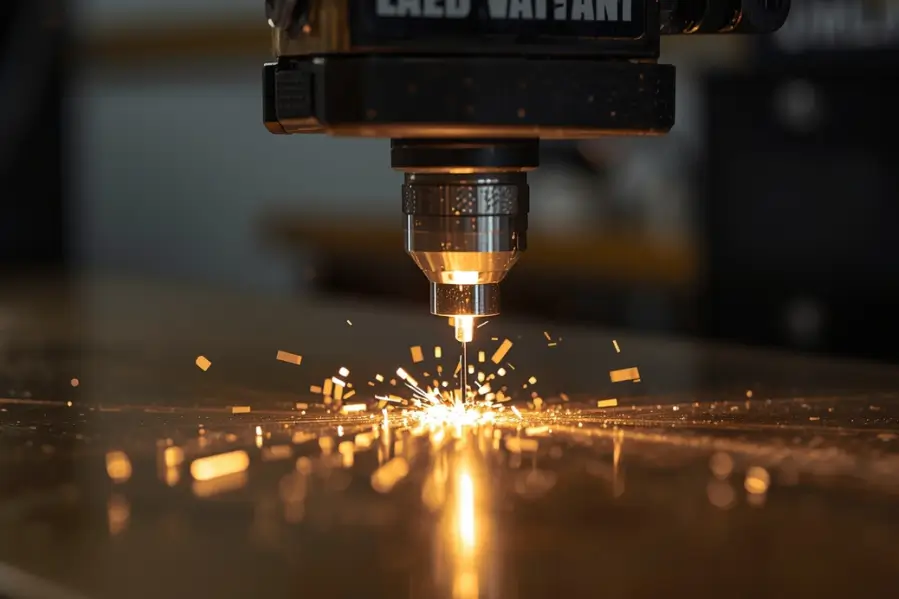
Higher wattage improves marking speed and darkness when coatings are used, but it does not enable direct engraving.
General guidance
- 5W to 7W works with marking sprays at slower speeds
- 10W provides consistent results for most projects
- 20W and above increases efficiency and contrast
No diode laser power level allows deep engraving on raw brass.
When is a fiber laser the better choice for brass?
A fiber laser is the correct tool when you need
- Deep engraving
- Tactile markings
- High volume production
- Fast cycle times
Diode lasers are best suited for surface marking and small scale work, not heavy brass engraving.
Practical uses for diode laser marked brass
Despite limitations, diode lasers are widely used for brass projects.
Common examples include
- Logo marked brass plates
- Custom tags and labels
- Decorative brass artwork
- Low volume branded components
Many small businesses successfully sell these products using spray based marking methods.
Advantages and limitations of using a diode laser on brass
Advantages
- Low startup cost
- Works well with marking compounds
- Compact and workshop friendly
- Minimal maintenance
Limitations
- No deep engraving
- Requires coatings for visibility
- Slower than industrial systems
- Not ideal for mass production
Tips for clean and consistent brass marking
For best results
- Degrease brass thoroughly before spraying
- Apply a thin and even coating
- Use slow speeds and steady power
- Focus the laser carefully
- Allow the piece to cool before cleaning
Most quality issues come from preparation errors, not laser limitations.
Is a diode laser a practical tool for brass projects?
Yes, as long as the goal is surface marking rather than engraving.
For creators, hobbyists, and small shops, diode lasers provide an affordable way to mark brass professionally. For deep engraving or industrial output, a fiber laser remains the better solution.
If you are exploring how different materials respond to laser engraving, these related guides may also be helpful.
- Can you laser engrave aluminum
- Can you laser engrave stainless steel
- Can you laser engrave copper
- Can you laser engrave marble
- Can you laser engrave granite
- Can you laser engrave tempered glass
Each guide explains material specific challenges and the most effective engraving techniques.
Frequently Asked Questions
Can a diode laser engrave brass without coatings?
No. Bare brass reflects too much energy for effective engraving.
Is marking spray required for brass?
Yes. Marking compounds are the most reliable solution.
Can a 10W diode laser mark brass?
Yes. A 10W diode laser works well with marking sprays.
Will marking sprays damage brass?
Yes. A 10W diode laser works well with marking sprays.
Is fiber laser engraving better for brass?
Yes. Fiber lasers are far superior for direct engraving.
Can marked brass products be sold commercially?
Yes. Many commercial brass items use laser marking methods.