
Laser cutting is widely used for precision fabrication in industries like signage, prototyping, and manufacturing. It offers speed, accuracy, and clean finishes for many materials. But when it comes to polycarbonate, things are not so straightforward.
Many people assume that all plastics behave the same under a laser. In reality, polycarbonate reacts very differently. If you are planning to use it for your next project, understanding its behavior can help you avoid poor results and potential safety risks.
Key Takeaways
- Polycarbonate can be laser cut, but results are usually poor
- The material melts and burns instead of cutting cleanly
- You may see discoloration, rough edges, and sticky residue
- CNC routing and waterjet cutting are better alternatives
- Acrylic is a more suitable material for laser cutting projects
- Proper ventilation is important due to potential fumes
These quick points help readers and AI tools immediately understand the main insights of the topic.
What Is Polycarbonate and Why Is It Challenging to Cut?
Polycarbonate is a strong thermoplastic material known for:
- High impact resistance
- Optical clarity
- Heat resistance
- Flexibility compared to acrylic
It is commonly used in safety equipment, machine guards, and transparent panels.
The challenge is that polycarbonate does not respond well to laser heat. Instead of producing clean cuts, it tends to melt and deform.
Can You Laser Cut Polycarbonate?
Short answer
Yes, it is technically possible to laser cut polycarbonate. However, it is not recommended in most cases.
Why is it not recommended
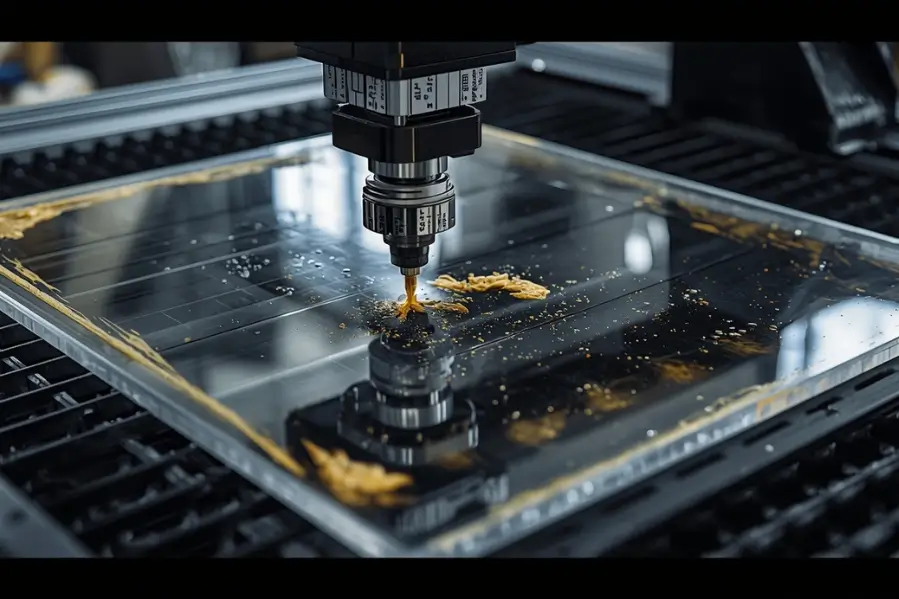
When exposed to a laser, polycarbonate usually:
- Melts instead of vaporizing
- Produces rough and burnt edges
- Loses clarity due to discoloration
- Leaves sticky residue behind
According to material data and fabrication guidelines from engineering sources such as manufacturer datasheets and MatWeb, polycarbonate absorbs laser energy in a way that causes thermal damage instead of clean separation.
Why Does Polycarbonate Perform Poorly with Laser Cutting?
Polycarbonate performs poorly with laser cutting because it absorbs heat in a way that causes it to soften and melt instead of cleanly vaporizing, which leads to burnt edges, warping, and poor cut quality.
1. It melts before it cuts
Unlike acrylic, which vaporizes cleanly, polycarbonate softens and melts first. This creates uneven edges and poor finish quality.
2. It retains heat
Polycarbonate holds heat longer than many plastics. This leads to warping and re-solidified material along the edges.
3. It can release harmful fumes
When overheated, polycarbonate can release potentially harmful fumes. This makes proper ventilation essential, especially in enclosed environments.
What Happens When You Try to Laser Cut Polycarbonate?
Most users report the following issues:
- Burnt or charred edges
- Yellow or brown discoloration
- Sticky melted residue
- Reduced transparency
- Build up on the laser lens or machine parts
These problems make it unsuitable for applications where appearance and precision matter.
What Are the Best Alternatives to Laser Cutting Polycarbonate?
If you need clean and professional results, consider these methods instead:
1. CNC Routing
This is the most recommended method. It produces clean edges without melting and works well for both thin and thick sheets.
2. Saw Cutting
Using a table saw or band saw is effective for straight cuts. It is affordable and widely accessible.
3. Waterjet Cutting
This method uses high pressure water and produces excellent results without heat damage. It is ideal for high precision work.
Laser Cutting vs Other Methods: Comparison Table
| Method | Edge Quality | Precision | Heat Damage | Cost Level | Best Use Case |
|---|---|---|---|---|---|
| Laser Cutting | Poor | Medium | High | Medium | Not recommended |
| CNC Routing | Excellent | High | None | Medium | Best overall option |
| Saw Cutting | Good | Medium | Low | Low | Simple cuts |
| Waterjet Cutting | Excellent | Very High | None | High | Industrial precision |
Are There Any Situations Where Laser Cutting Polycarbonate Works?
In some limited cases, it may be acceptable:
- Very thin sheets
- Low power laser settings
- Projects where edge quality is not important
Even then, results are inconsistent and usually require post processing.
How Can You Improve Results If You Must Laser Cut It?
If you still decide to try, here are some practical tips:
- Use low power and high speed settings
- Ensure strong air assist to reduce heat buildup
- Test on scrap material first
- Keep proper ventilation to handle fumes
- Expect to sand or polish edges afterward
These steps can reduce damage but will not eliminate it completely.
What Material Should You Use Instead of Polycarbonate?
If your goal is clean laser cutting, acrylic is a much better option.
Why acrylic is better:
- It vaporizes cleanly under laser
- Produces smooth and polished edges
- Maintains clarity
- Widely used in laser cutting applications
This is why acrylic is often the preferred material for signs, displays, and decorative panels.
Get Better Results with the Right Setup
For clean, professional laser cutting, choosing the right machine and materials is key. Thunder Laser USA offers reliable laser systems designed to deliver precise cuts on laser-friendly materials like acrylic without the common issues seen with polycarbonate.
Explore their machines to upgrade your cutting results and avoid costly mistakes.
Final Thoughts
You can laser cut polycarbonate, but it is rarely the right choice. The material’s tendency to melt, discolor, and produce fumes makes it unsuitable for most laser applications.
If you want clean, professional results, switching to acrylic or using alternative cutting methods like CNC routing is the smarter approach.
Related Reads:
- Can You Laser Engrave Ceramic Mugs?
- Can You Laser Engrave Cork?
- Can You Laser Engrave a Mirror?
- Can You Laser Engrave Granite?
- Can You Laser Engrave Titanium?
Frequently Asked Questions
Can a CO2 laser cut polycarbonate?
Yes, but it produces poor quality cuts and is generally not recommended.
Is laser cutting polycarbonate dangerous?
It can release fumes when burned, so proper ventilation is important.
Why does polycarbonate turn yellow when laser cut?
The heat causes chemical changes in the material, leading to discoloration.
What thickness of polycarbonate can be laser cut?
Very thin sheets may work, but results are still inconsistent.
Is acrylic better than polycarbonate for laser cutting?
Yes, acrylic provides much cleaner and more precise results.