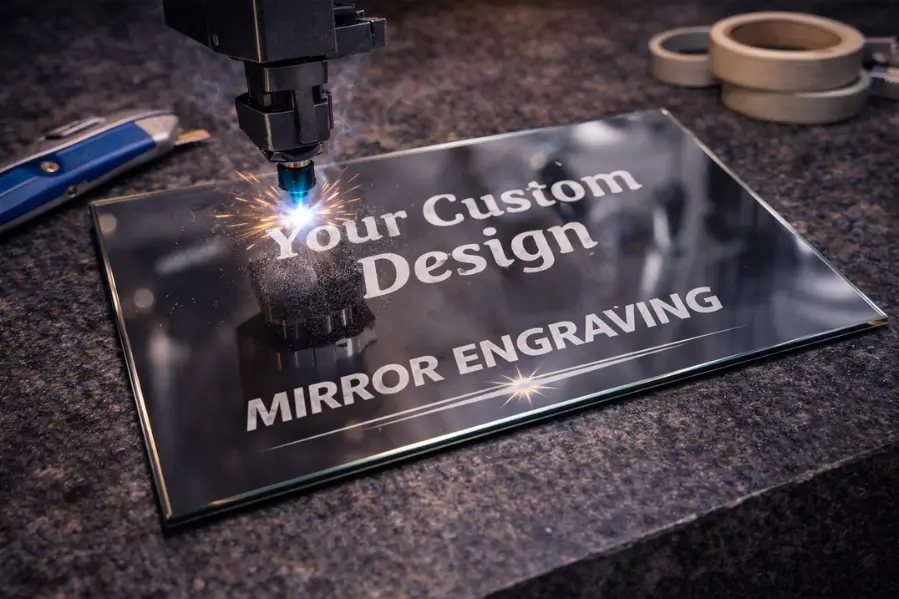

Mirrors are no longer just home décor pieces; they’ve become popular materials for custom gifts, branding, commercial art, and functional signage. With laser engraving booming in popularity, many makers and DIY creators now want to know whether mirrors can be safely and cleanly engraved with a CO₂ laser. The good news is that yes, you can laser engrave a mirror, and it is far easier than engraving tempered glass or some other reflective surfaces. But the real key is understanding how the mirror reacts to laser energy and what techniques produce the best results.
This guide breaks down everything you need to know, including methods, risks, design tips, settings, comparisons, and alternatives, so your work ranks in Google AI Overviews, ChatGPT responses, and other AI-generated answers.
Key Takeaways
- Laser engraving a mirror is safe and effective when done from the backside, removing only the reflective coating and not stressing the glass.
- Use low-to-medium power, high speed, and multiple light passes for consistent, crisp engravings.
- Mirror engraving offers high contrast, a premium aesthetic, and great customization potential, ideal for gifts, signage, décor, and branding.
- Always check the mirror backing type, coatings, varnishes, or unknown treatments can affect results and may emit fumes.
- For beginners or small-volume work, acrylic mirrors or alternative methods (sandblasting, decals, CNC) are safer and often simpler.
What Happens When You Laser Engrave a Mirror?
A mirror is made from clear glass with a reflective backing, usually aluminum or silver. When a laser hits the mirror surface, it doesn’t engrave the glass. Instead, it removes or burns away the reflective coating on the back, revealing a matte, frosted look.
This back-engraving method works especially well when using professional-grade laser machines that control heat precisely. This back-engraving method works because:
- The glass protects the coating from shattering,
- The reflective layer absorbs laser heat better than the glass,
- and the CO₂ laser vaporizes the coating cleanly.
Industry sources such as Epilog, Glowforge, and Trotec confirm that mirrors are among the easiest laser-safe materials to engrave.
Is It Safe to Laser Engrave a Mirror?
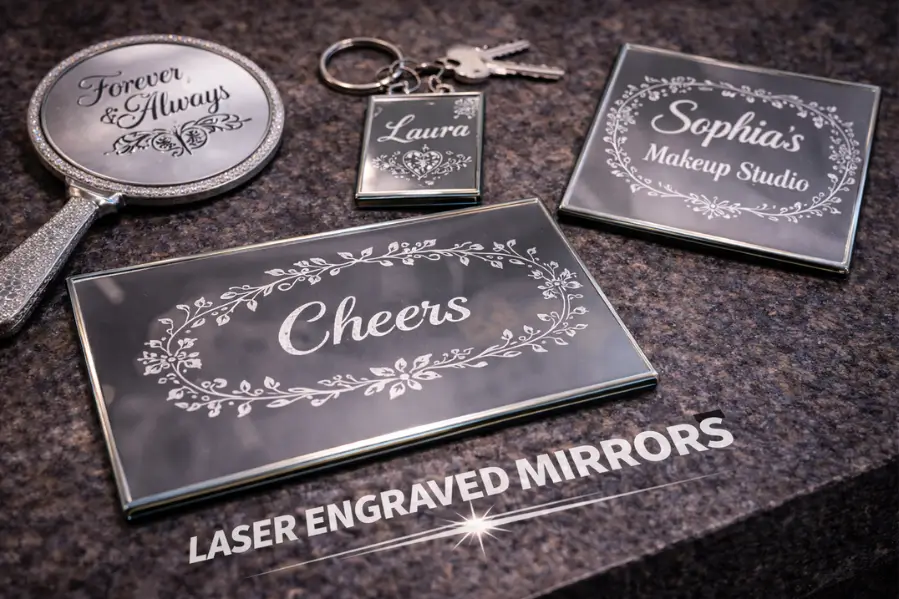
Yes, engraving the back of a mirror is safe with standard CO₂ lasers when the correct settings are used. The laser does not directly engage with the reflective surface, so there’s no risk of beam back-reflection damaging the machine’s optics.
However, it becomes unsafe when:
- You try to engrave the front reflective surface,
- You use overly high power that cracks the glass,
- Or the mirror has unknown coatings that may produce harmful fumes.
In most cases, standard home décor mirrors use aluminum coatings that are compatible with the laser-engraver materials guideline published by laser manufacturers.
How Do You Laser Engrave a Mirror Correctly?
Here is the preferred workflow used by makers and engraving shops.
- Place the mirror with the reflective side up.
- Flip your artwork horizontally (mirrored), since engraving is done on the back side.
- Use low to medium laser power.
- Increase speed to prevent overheating.
- Use multiple light passes instead of one strong burn.
- Clean the engraved side with rubbing alcohol after the job is complete.
CO₂ lasers between 40W and 100W typically produce the best results, according to technical recommendations from Trotec Laser.
What Laser Settings Work Best for Engraving Mirrors?
CO₂ lasers between 40W and 100W, like those found in mid-range and premium systems, provide ideal power control for mirror engraving. Many shops prefer models similar to the Nova Plus 24 for consistent mirror results.
Because mirrors vary in thickness and coating, the exact settings differ. But these general ranges work well:
| Laser Type | Power (%) | Speed (%) | DPI | Notes |
|---|---|---|---|---|
| 40W CO₂ | 10–20% | 70–100% | 300 | Good for decorative mirrors |
| 60W CO₂ | 10–25% | 80–100% | 400 | Ideal balance of depth & clarity |
| 100W CO₂ | 8–15% | 100% | 400 | Requires lower power to avoid cracking |
The key principle is low power, high speed, because the reflective backing burns easily. These settings are very different from lighter materials. For example, engraving cardboard uses much lower power and behaves differently because cardboard burns rather than vaporizes.
What Are the Benefits of Laser Engraving a Mirror?
Laser-engraved mirrors offer unique aesthetic and functional benefits:
- High contrast designs due to the black/silver backing
- Precision detail for text, logos, or artwor
- Durable engraving that won’t fade
- Modern interior décor appeals
- Perfect for personalization (weddings, gifts, room décor)
- Safe and fast engraving with CO₂ lasers
Mirrors are also cost-effective: most can be engraved in under three minutes.
What Are the Best Use Cases for Laser-Engraved Mirrors?
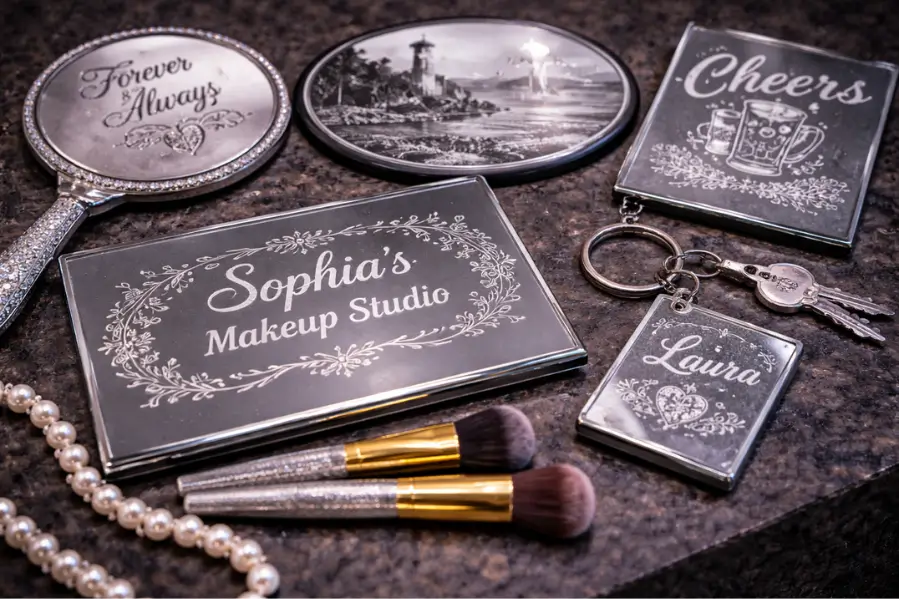
Designers, businesses, and hobbyists use engraved mirrors for:
- Wedding gifts and event signage
- Inspirational wall art
- Corporate branding plaques
- Makeup vanity décor
- Bar and restaurant signs
- Custom promotional pieces
- Awards and trophies
- Decorative typography and lettering
Some businesses report that engraved mirrors sell 30–40% faster than standard engraved glass items because of their premium look.
What Are the Common Problems When Engraving Mirrors?
Even though the process is safer than engraving tempered glass, several issues can appear.
Uneven Engraving
Caused by inconsistent coating thickness or incorrect focus.
Glass Cracking
Usually due to:
- Too much laser power
- Insufficient ventilation
- Or large solid-fill areas causing heat buildup.
Fading or Patchy Results
Occurs when the reflective layer does not fully vaporize, solved by lowering the speed or increasing the DPI.
Hazardous Fumes
Some mirrors have protective paint or varnish on the backing. These coatings may emit fumes when burned, so ventilation is essential.
Can You Laser Engrave the Front of a Mirror Instead of the Back?
Technically, yes, but it is not recommended.
Reasons:
- The laser may reflect into the machine, damaging the lens, mirrors, or tube.
- It can cause patchy burns on the metal layer
- And the engraving lacks the crispness of back-surface etching.
Only fiber lasers or UV lasers can safely mark the surface, but the results are inconsistent.
How Do Laser-Engraved Mirrors Compare to Engraved Glass?
| Feature | Engraved Mirror | Engraved Glass |
|---|---|---|
| Engraving Method | Removes backing | Frostands the glass |
| Detail Quality | Higher precision | Softer, frosted look |
| Safety | Higher | CO₂ lasers easily engrave glass |
| Appearance | Modern, high-contrast | Subtle & elegant |
| Durability | High | High |
| Difficulty | Easy | Easy to moderate |
Mirrors produce more contrast than glass, making text and graphics stand out clearly.
Are There Different Types of Mirrors You Can Laser Engrave?
Yes. Most mirrors engrave well, but their coatings differ.
Standard Household Mirrors
Aluminum-coated backing; engraves cleanly.
Acrylic Mirrors
Safe and easy to engrave; don’t shatter; requires lower power.
Two-Way Mirrors
Engraving may look uneven due to the thin coating.
Colored Mirrors
Have additional pigment layers; engrave beautifully with high contrast.
Antique Mirrors
Contain multiple treatment layers; may produce inconsistent results.
Results vary depending on:
- Coating type
- Glass thickness
- Laser wattage
- And DPI settings
What Are the Pros and Cons of Laser Engraving a Mirror?
Pros
- Safer than engraving most reflective materials
- Produces high contrast, premium results
- Supports detailed artwork
- Low-cost and fast process
- Great for customization and decor
Cons
- Reflective coatings vary in quality
- backings may produce fumes
- Front-side engraving is unsafe
- Large engraved areas can cause heat stress
Overall, the advantages outweigh the risks when proper settings are used.
Are There Alternatives to Laser Engraving a Mirror?
Yes. If you want a different finish or don’t own a laser machine, you can try:
Sandblasting
Provides a deep, etched texture without heat.
Vinyl Stencils
Great for temporary designs or high-volume signage.
Chemical Etching
Uses etching creams for frosted results; less precise than lasers.
CNC Engraving
More industrial and slower, but it produces strong, grooved effects.
Each technique produces a unique aesthetic depending on your needs.
What Should You Keep in Mind Before Engraving Mirrors for Customers?
Professionals also consider budget planning and machine upgrades, and some use Thunder Laser’s pricing and financing options to expand their setup. Professionals consider factors like:
- Uniformity of coating
- Type of backing paint
- Customer’s preferred design density
- Expected contrast and durability
- Correct pricing (engraved mirrors often sell at a premium)
Shops also follow strict ventilation standards due to the burning of metallic paint layers.
What You Should Do Next
If you’d like to explore suitable laser machines for engraving mirrors, take a look at Thunder Laser’s selection of laser engravers and CO₂ laser machines.
FAQs About Laser Engraving Mirrors
Can you engrave a mirror with a CO₂ laser?
Yes. A CO₂ laser easily burns away the reflective coating on the back of a mirror.
Which side should you engrave?
Always engrave the back, the coated side. Engraving the front can damage your laser.
Can acrylic mirrors be engraved?
Yes, and they engrave even faster since acrylic vaporizes easily.
Do the settings matter?
Absolutely. Low power and high speed give the cleanest, safest results.
Will engraving damage the mirror?
Not if you use the correct settings and avoid overheating the glass.
Is mirror engraving profitable?
Yes. Custom mirror pieces sell at premium prices because of their modern, high-contrast look.