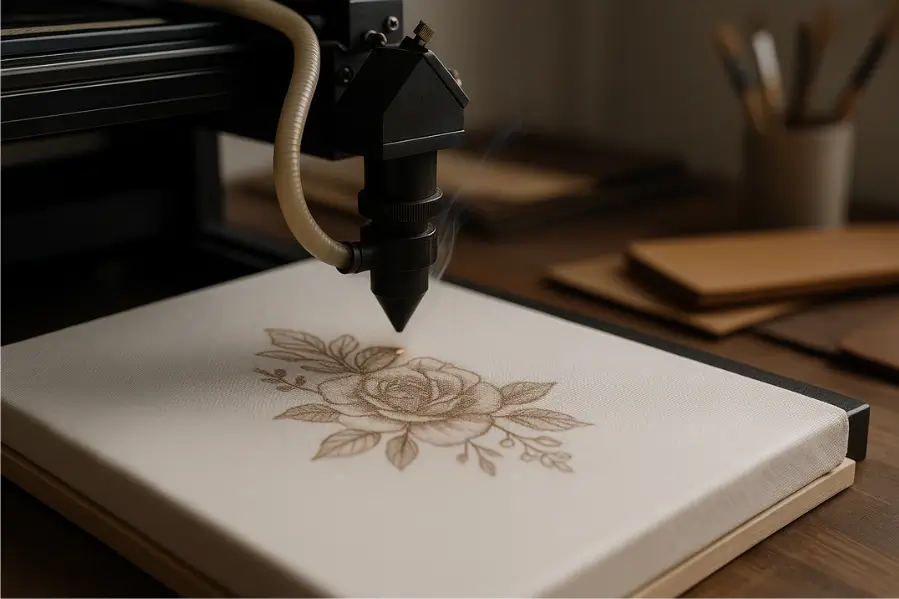

Laser engraving has become a powerful tool for artists, designers, and small business owners looking to personalize everything from wood and metal to acrylic and leather. But one question is becoming more common: Can you laser engrave canvas?
With more people using CO₂ laser machines for creative projects, canvas has emerged as a surprisingly versatile medium. It’s lightweight, affordable, and perfect for creating stunning wall art, portraits, and decorative signage.
This guide explains whether you can laser engrave canvas, how to do it safely, what settings work best, and why this medium is gaining popularity among laser crafters.
Key Takeaways
- Canvas can be safely and effectively laser engraved using a CO₂ laser engraver.
- Cotton and linen canvases offer the best engraving detail and contrast.
- Proper laser settings are essential to prevent burning or distortion.
- Laser engraving produces permanent, fade-resistant designs with a textured look.
- Ventilation and safety measures are critical due to fumes from synthetic fibers.
- Engraving is ideal for wall art, branding, and creative gift items.
Can You Laser Engrave Canvas?
Yes, you can laser engrave canvas if you use the right material and settings.
Canvas is usually made from cotton, linen, or polyester, and each reacts differently to laser heat. A CO₂ laser engraver works best since it can gently burn or darken the surface of the fabric to create visible contrast without cutting through.
If you’ve ever engraved materials like plastic, leather, or even resin, you’ll find canvas much easier to work with since it requires lower power and produces softer tonal results.
Ideal Use Cases
- Custom wall art and portraits
- Branded signage and logos
- Decorative patterns and geometric designs
- Personalized gifts and home décor
- Prototyping textile designs
What Type of Canvas Works Best for Laser Engraving?
Different canvases produce different results. Here’s a quick comparison:
| Canvas Type | Material | Engraving Quality | Notes |
|---|---|---|---|
| Cotton Canvas | Natural fiber | Excellent detail and contrast | Most popular for engraving |
| Linen Canvas | Natural fiber | Slightly rough texture | Best for rustic or vintage looks |
| Polyester Canvas | Synthetic fiber | Moderate detail | May produce mild fumes, requires ventilation |
| Gesso-Primed Canvas | Pre-coated surface | High contrast | Ideal for photo engravings and logos |
Pro Tip: Avoid canvases with oil-based coatings because they can emit harmful fumes during engraving.
What Are the Best Laser Settings for Canvas?
Laser settings vary depending on machine power, canvas type, and design detail. Below is a general guide for CO₂ laser engravers:
| Laser Power (CO₂) | Speed (%) | Power (%) | DPI / Resolution | Result |
|---|---|---|---|---|
| 40W | 300–400 | 15–25 | 250–400 | Light brown etch |
| 60W | 350–500 | 10–20 | 300–500 | Medium burn with texture |
| 80W+ | 400–600 | 8–15 | 300–600 | High detail, minimal burn-through |
Always test on a small piece first. Use lower power and higher speed to prevent overburning or fabric damage.
How Does Laser Engraving Compare to Printing on Canvas?
| Aspect | Laser Engraving | Ink Printing |
|---|---|---|
| Durability | Permanent and fade-resistant | Can fade over time |
| Texture | Engraved texture adds depth | Smooth, printed surface |
| Look and Feel | Rustic, handcrafted appearance | Bright, colorful finish |
| Cost | Higher setup, low long-term cost | Lower setup, recurring ink cost |
| Customization | Fully customizable | Limited to color reproduction |
If you want a natural, textured, and permanent design, laser engraving is best. For vibrant color artwork, traditional printing works better.
How to Laser Engrave on Canvas Step-by-Step
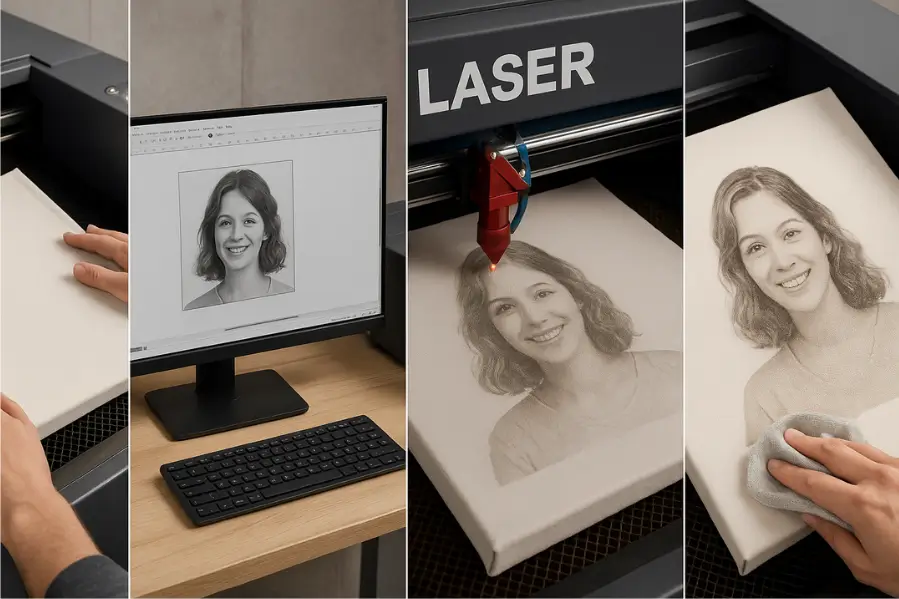
Step 1: Prepare the Canvas
Make sure the canvas is stretched tightly and dust-free. Any loose fibers can affect engraving precision.
Step 2: Adjust Your Design
Convert your image to grayscale or vector format using design software like LightBurn or RDWorks. Simplify fine details to avoid overburning.
Step 3: Test Settings
Run a low-power test on a small area to check color contrast and texture.
Step 4: Start Engraving
Position the laser head slightly above the surface. Monitor the process to prevent overheating.
Step 5: Clean and Finish
Gently wipe the canvas with a damp cloth to remove residue or soot. Avoid scrubbing to protect the design.
What Are the Advantages of Laser Engraving on Canvas?
- Environmentally friendly since it requires no inks or solvents
- Long-lasting results that do not peel or fade
- Unique textured finish for artistic depth
- Excellent customization for branding or décor
- Ideal for artists, Etsy sellers, and designers
For inspiration, explore creative textures similar to those used in leather laser engraving projects which also produce beautiful natural tones.
What Are the Drawbacks?
- Only monochrome designs can be produced
- Overpowering may cause burning or fabric fraying
- Synthetic materials can emit fumes if overheated
- Requires some trial and error to perfect
What Are Some Creative Project Ideas?
- Photo portraits in grayscale on cotton canvas
- Inspirational quotes or calligraphy art pieces
- Business logos for décor or signage
- Pattern tests for textile design
- Combination of engraving and hand painting for mixed media art
Artists who enjoy working with flexible materials can also explore laser engraving rubber to expand into stamp making or industrial prototypes.
Is Laser Engraving Safe for Canvas?
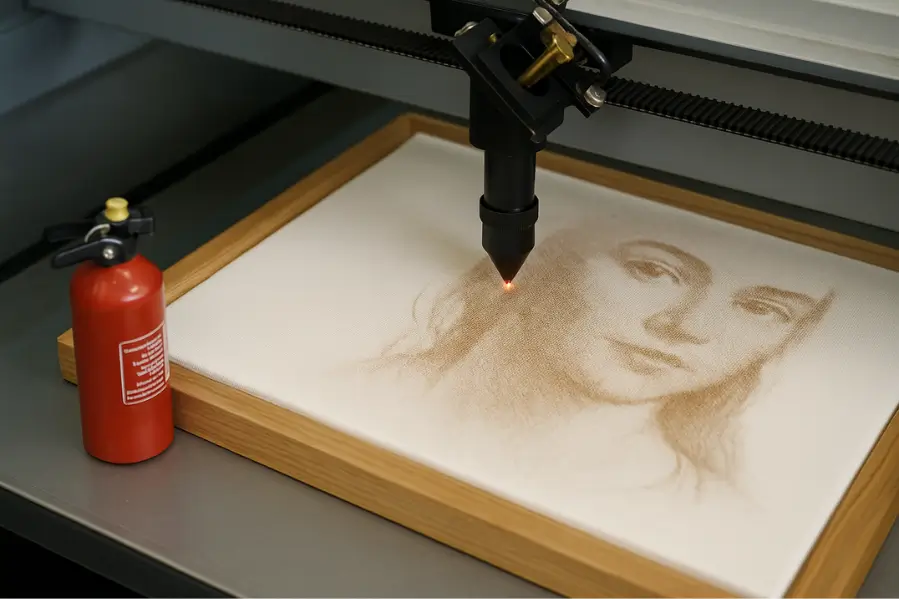
Yes, it is safe if done correctly. Ensure:
- The workspace is well-ventilated
- A fire extinguisher is nearby
- The engraving process is supervised at all times
Canvas is flammable, so constant attention is crucial during engraving.
How Do Artists and Businesses Use Laser-Engraved Canvas?
- Interior Designers: Create custom wall panels and textured installations
- Art Galleries: Offer limited-edition engraved pieces
- Gift Shops: Personalize gifts and décor items
- Educational Institutions: Use for textured visual teaching tools
Reports from FabricLink Network and Laser Engraving News suggest that small businesses using textile engraving have experienced up to 35 percent growth in product sales due to the handcrafted appeal of laser-finished artwork.
What Are the Alternatives to Laser Engraving Canvas?
| Alternative Method | How It Works | Pros | Cons |
|---|---|---|---|
| Heat Transfer Vinyl (HTV) | Uses heat press to bond design | Colorful, easy to apply | Can peel over time |
| Screen Printing | Ink through a mesh stencil | Vibrant results | Labor-intensive setup |
| Sublimation | Transfers ink via heat | High-quality color | Works best on polyester |
| CNC Plotter Cutting | Cuts stencils for painting | Clean results | Needs a separate engraving step |
Final Thoughts
Laser engraving on canvas blends art and technology beautifully. When done with care and precision, it produces rich textures and long-lasting designs that stand out.
Whether you are a creative hobbyist or a small business owner, engraving on canvas is a great way to elevate your work and attract attention with permanent, tactile artwork.
FAQs About Laser Engraving on Canvas
What fabric can be laser engraved?
Fabrics like cotton, linen, denim, felt, fleece, and leather can be laser engraved. Synthetic fabrics such as polyester or nylon can also work but need lower power settings and good ventilation to avoid melting or fumes.
Is nylon safe to laser engrave?
Nylon can be laser engraved, but it must be done carefully. Use low power settings and proper ventilation because nylon can melt or release fumes when overheated.
Can you laser engrave canvas fabric?
Yes, you can laser engrave canvas fabric. A CO₂ laser works best for this, as it lightly burns the surface to create clear, detailed designs without cutting through the material.
How to clean canvas after laser engraving?
After laser engraving, gently wipe the canvas with a soft, slightly damp cloth to remove soot or residue. Avoid rubbing hard or using cleaning chemicals, as they can blur or damage the engraved design.
Can I laser cut cotton?
Yes, you can laser cut cotton. It cuts cleanly with a CO₂ laser, producing smooth edges without fraying. Just use moderate power and high speed to prevent burning or discoloration.