
Cork is a natural material that has become popular in packaging, home decor, coasters, yoga products, and promotional items. Because it is lightweight, eco friendly, and easy to customize, many makers want to know if cork can be laser engraved.
The good news is that cork engraves very well with a laser when done correctly. This guide explains how cork behaves under a laser, what type of results to expect, and how to avoid common engraving mistakes.
How does cork respond to laser engraving?
Cork is made from the bark of cork oak trees and contains a high amount of air trapped in its cellular structure. This makes it soft, compressible, and easy for laser energy to break down.
When a laser beam hits cork, the surface material burns away quickly, creating a recessed engraved area with natural contrast. Unlike metal, cork does not reflect laser energy, which is why it engraves easily.
Is cork safe to engrave with a laser?
Yes, cork is generally safe to laser engrave when proper ventilation is used.
During engraving, cork produces smoke and a burnt wood smell. Good airflow and exhaust systems help remove fumes and prevent residue buildup on the surface.
Cork does not release toxic gases like some synthetic materials, but basic laser safety practices should always be followed.
What type of laser works best for engraving cork?
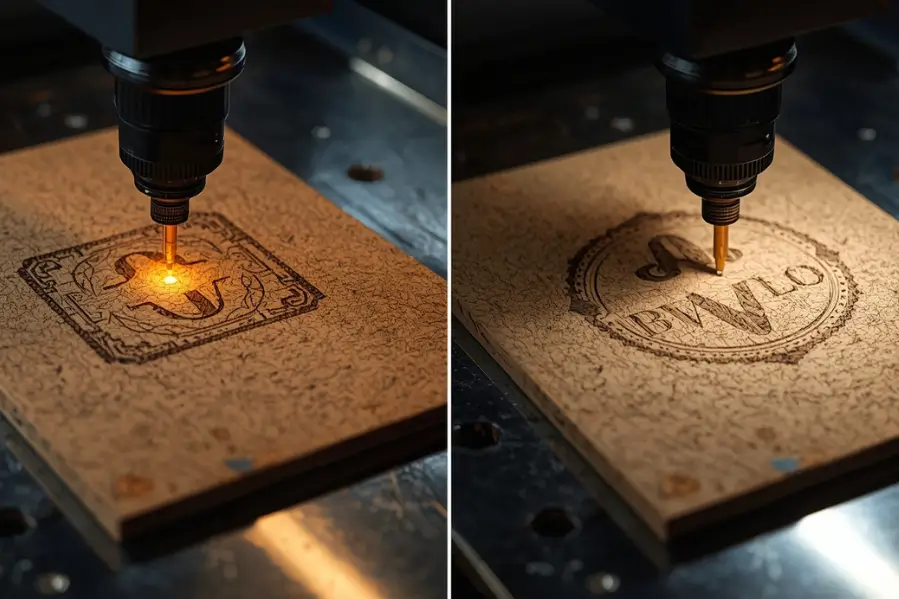
Both diode lasers and CO2 lasers work well on cork.
Diode lasers are popular for small projects and home workshops because they can produce clean engravings with good control. CO2 lasers engrave cork faster and more evenly, especially for larger designs or production work.
Fiber lasers are not suitable for cork.
What does engraved cork look like?
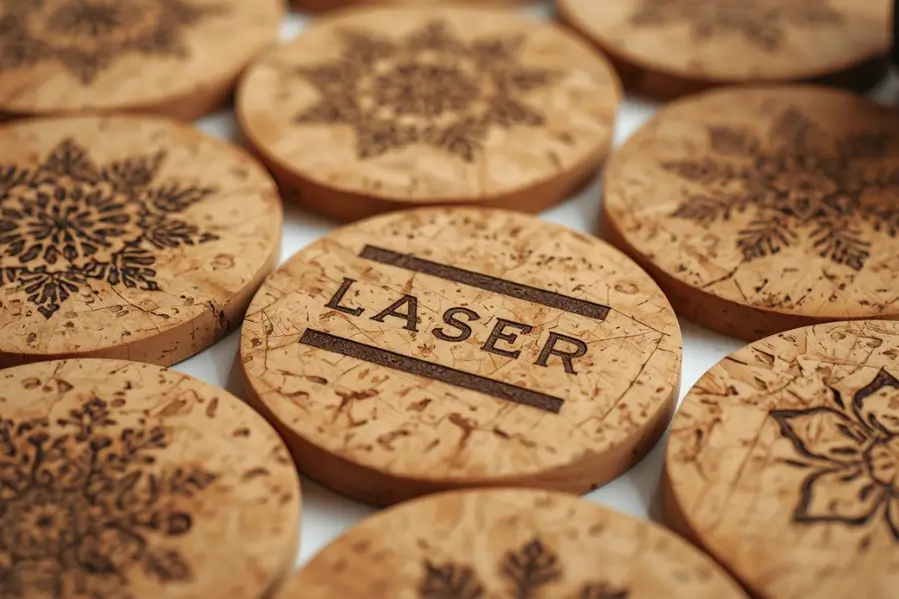
Engraved cork typically has a dark brown or black recessed mark with a natural textured appearance. The depth and darkness depend on laser power, speed, and the density of the cork.
Because cork is a natural material, variations in texture and color are normal and give each engraved piece a unique look.
What products are commonly made from laser engraved cork?
Cork is widely used for both decorative and functional items.
Common examples include
- Drink coasters
- Yoga blocks
- Cork wallets and bags
- Packaging inserts
- Promotional gifts
- Wall art and signage
Laser engraving allows branding and personalization without adding inks or chemicals.
What settings work best for engraving cork?
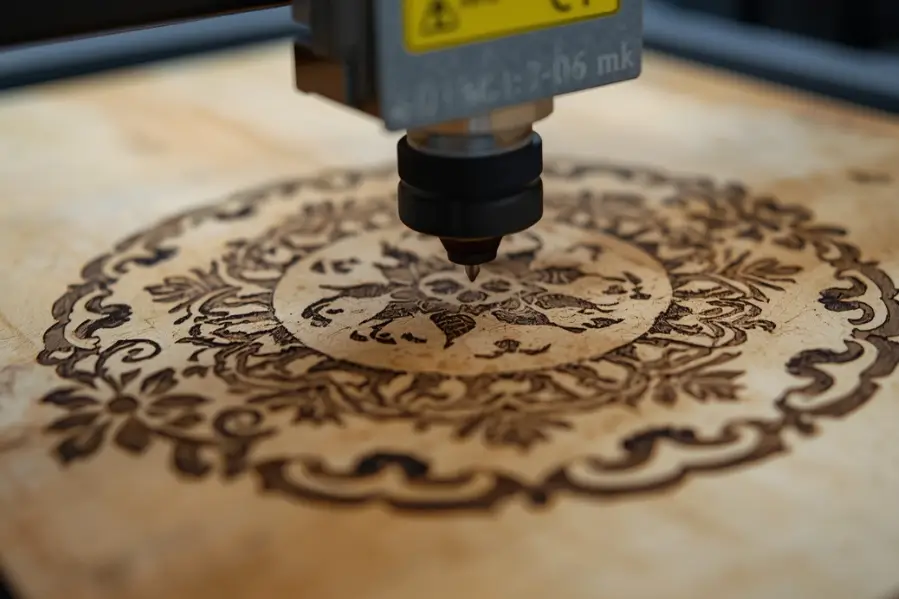
Cork engraves easily, so aggressive settings are not needed.
General tips include
- Use lower power with moderate speed
- Avoid multiple deep passes that can cause charring
- Test on scrap pieces first
- Keep the laser focused slightly above the surface for cleaner edges
Because cork density varies, small test runs are essential.
What problems can occur when engraving cork?
Although cork is easy to engrave, a few issues can appear.
Common problems include
- Excessive burning or charring
- Crumbly edges on very soft cork
- Smoke staining around fine details
These issues are usually solved by increasing speed, lowering power, or improving airflow.
Can cork be cut with a laser as well?
Yes, cork can be laser cut.
Thin cork sheets cut cleanly with both diode and CO2 lasers. Thicker cork may require multiple passes. Clean edges depend on proper focus and balanced settings.
Laser cutting cork is commonly used for craft shapes, packaging components, and layered designs.
How can you get cleaner engravings on cork?
For the best results
- Use flat and evenly compressed cork
- Mask the surface with low tack tape if staining occurs
- Keep airflow strong during engraving
- Avoid over engraving deep designs
- Clean residue gently with a soft brush
Small adjustments make a noticeable difference with cork.
Is laser engraving cork worth it?
Yes. Cork is one of the easiest and most forgiving materials to laser engrave.
It requires minimal preparation, engraves quickly, and produces attractive natural results. This makes cork an excellent choice for beginners, small businesses, and eco conscious product lines.
If you are working with different materials, you may also find these guides helpful.
- How to laser engrave soft materials
- Can you laser engrave rubber
- Can you laser engrave silicone rubber
- Can you laser engrave plastic
- Can you laser engrave tempered glass
- Can you laser engrave stone like slate and marble
These guides explain how different materials react to laser engraving and which laser type works best for each one.
Frequently Asked Questions
How do you seal laser engraved cork?
Laser engraved cork can be sealed using a clear water based sealer, acrylic spray, or natural oils like mineral oil. Apply a thin, even coat to protect the surface, reduce crumbling, and enhance contrast without soaking the cork.
How to clean cork after laser engraving?
After laser engraving cork, gently brush off residue with a soft brush or dry cloth. For stubborn soot, lightly wipe the surface with a slightly damp cloth and allow it to air dry completely before sealing or using the item.
Can a fiber laser engrave cork?
No. A fiber laser cannot engrave cork effectively. Fiber lasers are designed for metals and do not interact well with organic materials like cork, often causing burning or no usable engraving at all. Diode or CO2 lasers are the correct choice for engraving cork.
Does cork burn when laser engraved?
Cork chars slightly during engraving, which creates contrast. Excessive burning can be avoided with proper settings.
Is CO2 or diode better for cork?
Both work well. CO2 lasers are faster, while diode lasers offer good control for small projects.