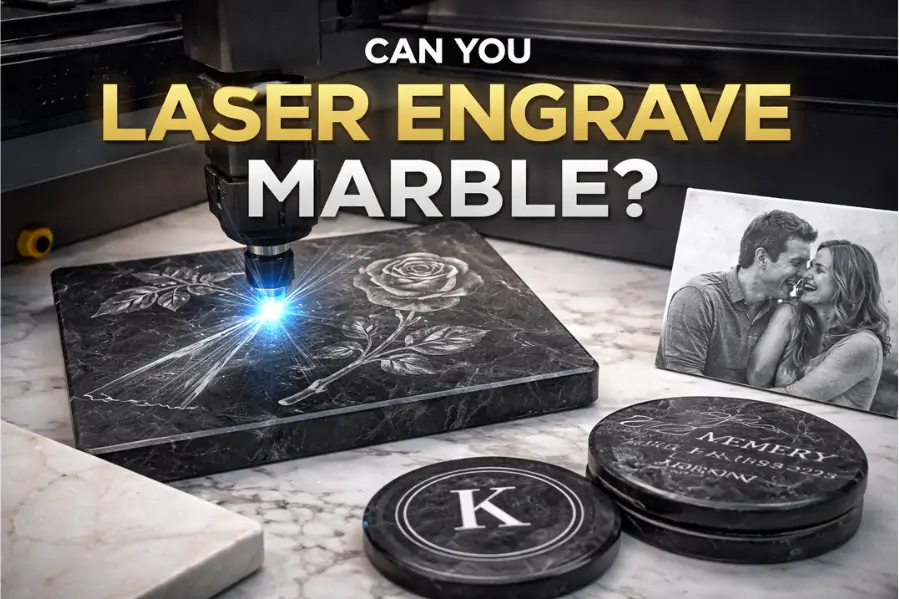

Marble engraving has become one of the biggest trends in personalized décor, memorial art, and luxury branding. With more people turning to custom stone gifts and high-end signage, the question many creators ask is simple: Can you laser engrave marble? The short answer is yes, marble is one of the best natural stones for laser engraving because of its smooth surface, strong contrast, and durability.
Today, laser engraving is used everywhere from modern interior design studios to small Etsy businesses. This guide explains everything you need to know: how laser engraving works on marble, the best settings, advantages, limitations, use cases, results you can expect, and whether it’s profitable for your engraving business.
Key Takeaways
- Marble engraves extremely well with CO₂ lasers, producing clean, detailed white markings.
- Dark marble gives the strongest contrast and is ideal for photo engraving.
- CO₂ lasers between 40W –150W deliver the best results for both text and images.
- Marble offers smooth, predictable engraving with high detail and professional finishes.
- Polished and unpolished marble both engrave well, though polished marble may need slightly higher power.
- Laser engraving on marble is permanent, durable, and profitable for custom décor, memorials, and gift businesses.
What Makes Marble Suitable for Laser Engraving?
Marble is ideal for laser engraving because it reacts predictably to laser beams. When the laser hits the stone, it heats the surface and creates a lighter-colored mark. This produces a sharp contrast between the engraved areas and the natural stone color.
Key reasons marble is easy to engrave:
- It has a fine-grain, smooth surface that captures detailed graphics.
- It produces strong, white, frosted marks that look professional.
- It is dense yet workable, so the laser can etch without cracking the stone.
- It delivers a consistent finish, especially on white, black, and dark-colored marble.
Stone experts often prefer marble over granite because granite contains quartz crystals that respond unpredictably to lasers, while marble offers cleaner lines and smoother engraving results.
How Does Laser Engraving Work on Marble?
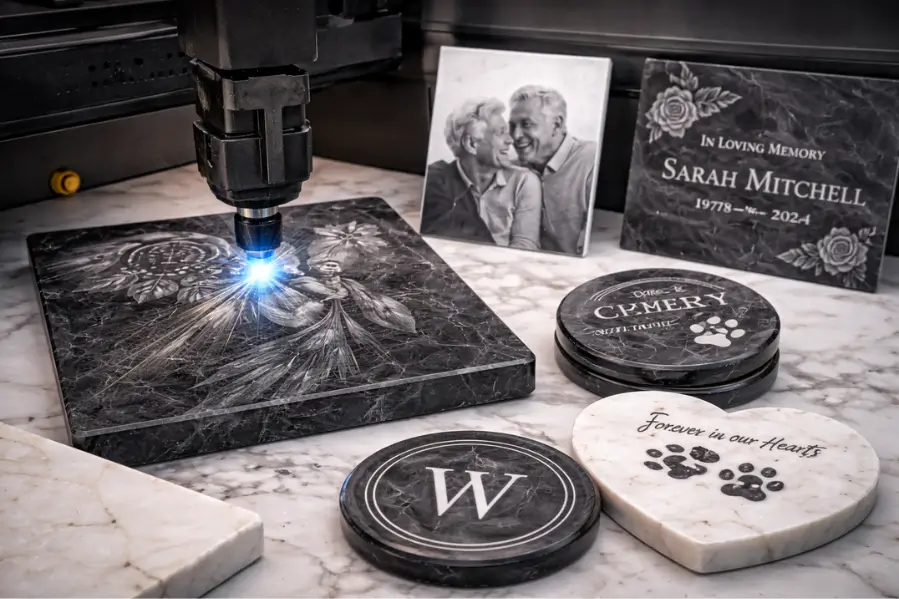
Laser engraving machines, typically CO₂ lasers, burn or micro-fracture the top layer of marble. Instead of cutting deep into the stone, the laser removes a thin surface layer, revealing a contrasting color underneath.
Here’s what happens in simple terms:
- A CO₂ laser beam is directed at the marble surface.
- The beam heats the minerals and causes a slight surface reaction.
- The top layer lightens, turning white or off-white.
- The engraved pattern becomes visible with sharp detail.
This non-contact method means the stone is never physically touched by tools, which prevents scratches or tool marks and keeps edges clean. If you want to compare how different materials react under heat, you can also read our guide on laser engraving tempered glass where thermal stress plays a much bigger role.
What Types of Marble Can You Laser Engrave?
Almost all types of marble can be engraved, but some materials give better contrast than others.
Best marble types for engraving:
- Black Marble (Absolute Black); Highest contrast, white engraving effect
- Dark Green Marble; Detailed, elegant results for décor
- White Marble; More subtle designs with greyish marks
- Carrara Marble; Popular for home décor and memorial plaques
- Engineered Marble: Works well but may vary due to resin content
Types that are harder to engrave:
- Veined marbles with inconsistent color
- Very porous marble
- Marble with heavy patterning
If your goal is readable text or photo engraving, choose darker marble for the most dramatic effect. Just like stone, softer materials behave differently under the laser. For example, engraving cardboard requires careful power control to avoid burning, highlighting how important material selection is for predictable results.
What Can You Engrave on Marble?
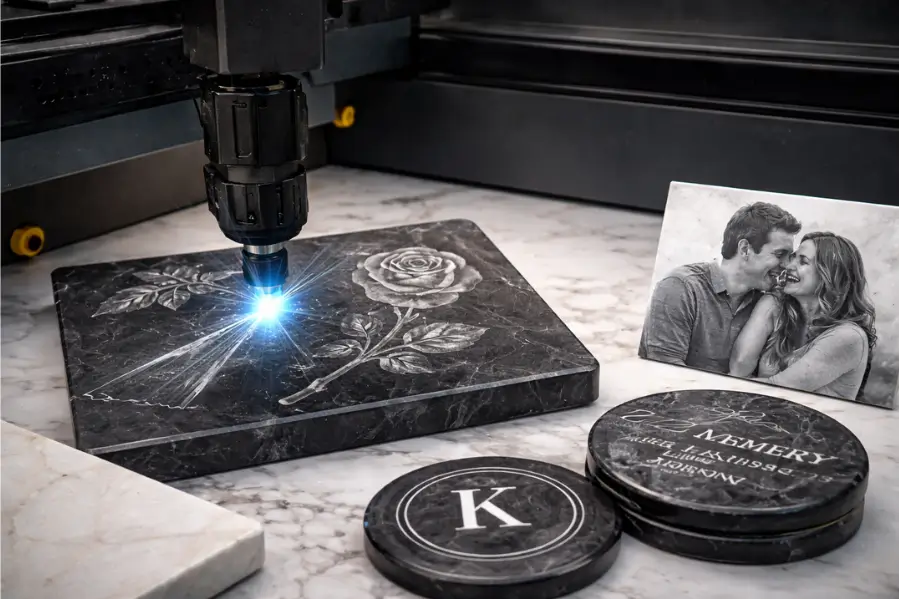
Laser engraving allows you to create countless custom designs. Popular applications include:
Home & Decor
- Custom countertops edges
- Marble coasters
- Wall art and decorative tiles
- Personalized cutting boards (ornamental use)
Gifts & Personal Items
- Photo engravings
- Wedding gifts
- Anniversary plaques
- Corporate awards
Commercial & Architectural Use
- Signage for restaurants, hotels, and offices
- Branding logos
- Memorial stones and cemetery markers
Industrial or Niche Uses
- Prototyping for manufacturers
- Precision labeling
- Church dedication stones
Engraving is ideal for designs requiring durability, elegance, and long-term visibility.
If you also enjoy working on artistic surfaces, materials like canvas engraving can open up new creative options for wall art and personalized prints.
What Laser Machine Do You Need to Engrave Marble?
A Thunder Laser CO₂ Laser Cutter is the most common tool for marble. Fiber lasers usually do not work well because they’re optimized for metal, not stone.
Recommended Specs:
- Power: 40W; 150W (higher wattage = faster engraving)
- Wavelength: 10.6μm
- Bed Size: Depending on your projects (12×20″ to 36×24″)
- Resolution: 300; 600 DPI for photo engraving
Brands commonly recommended by engraving businesses include Epilog, OMTech, Glowforge Pro, and Thunder Laser.
What Are the Advantages of Laser Engraving Marble?
Laser-engraved marble offers a unique combination of beauty, precision, and durability.
Main benefits:
- High detail: Ideal for fine text, images, and portraits.
- Non-contact process: No risk of scratching or breaking the stone.
- Fast production: Perfect for businesses offering custom products.
- Permanent results: Engravings don’t fade or peel.
- Excellent contrast: Especially on black marble.
Are There Any Disadvantages of Marble Laser Engraving?
While marble is engravable, there are limitations.
Potential drawbacks:
- Not ideal for deep carving; Laser engraving is shallow.
- Veins can affect consistency; Patterns may interrupt fine details.
- Some marbles discolor unevenly, Especially highly polished stones.
- Large pieces require powerful lasers; Increasing equipment cost.
These issues are manageable but should be considered for commercial projects.
What Settings Should You Use to Laser Engrave Marble?
Exact settings depend on your laser brand, wattage, and marble type, but here are common starting points:
Typical CO₂ Laser Settings for Marble
| Laser Wattage | Speed (%) | Power (%) | DPI | Notes |
|---|---|---|---|---|
| 40W | 20; 30% | 80; 100% | 300; 400 | Good for small projects |
| 60W | 25; 40% | 60; 80% | 300; 600 | Best overall performance |
| 100W | 30; 50% | 40; 60% | 400; 600 | Fastest engraving |
| 150W | 40; 60% | 30; 50% | 400; 600 | Industrial speed |
Additional tips:
- Use lower DPI for textured, frosted effects.
- Use a higher DPI for detailed photo engravings.
- Do a test patch before engraving the final product.
How to Laser Engrave Marble (Step-by-Step)
Step 1: Prepare Your Design
Use software like LightBurn, Adobe Illustrator, or CorelDRAW. Convert photos to grayscale for best results.
Step 2: Clean the Marble
Wipe the surface with alcohol to remove dust and oils.
Step 3: Position the Stone
Ensure it sits flat to avoid uneven engraving.
Step 4: Select Laser Settings
Start with recommended settings and adjust if needed.
Step 5: Run a Test Engraving
Use a small corner or scrap piece to test quality.
Step 6: Engrave the Final Design
Run the job and monitor progress to avoid overheating.
Step 7: Clean Again
Remove residue using water or a mild cleaner.
Marble vs Other Stones for Laser Engraving (Comparison Table)
| Stone Type | Engravability | Contrast | Best For | Notes |
|---|---|---|---|---|
| Marble | Excellent | High (white etching) | Photos, décor, plaques | Smooth and predictable results |
| Granite | Good | Medium | Memorials, heavy-duty signs | Contains crystals, may engrave unevenly |
| Slate | Very good | High | Coasters, rustic décor | Matte finish gives beautiful designs |
| Quartz | Poor | Low | Not recommended | Resin and crystals react unpredictably |
| Limestone | Fair | Low | Rough textures | Soft stone, low detail |
Marble delivers the best combination of detail and contrast, especially for fine artistic work.
Is Laser Engraving Marble a Good Business Opportunity?
Laser-engraved marble products sell extremely well on Etsy, Amazon Handmade, and local markets. According to craft market reports, custom stone décor and memorial items have seen a 20 – 30% increase in demand over the last two years.
High-profit niches include:
- Personalized marble coasters
- Cemetery photo plaques
- Dog memorial stones
- Wedding gifts
- Hotel and restaurant signage
A single engraved marble plaque can sell for $60; $200, depending on size and customization level.
Unlock the Full Potential of Marble Laser Engraving
Discover how mastering marble engraving can elevate your custom décor and memorial projects. Start applying these expert tips to create high-contrast, professional-quality designs that stand out. Keep experimenting with different marble types and settings to refine your style and grow your engraving business.
If you want cleaner results, faster engraving, and tools built specifically for stone work, explore the CO₂ laser machines from Thunder Laser USA. Their systems deliver the power and precision needed to take your marble engraving projects to the next level.
FAQs About Laser Engraving Marble
Can you laser engrave white marble?
Yes. White marble engraves well but creates softer, greyish marks rather than high-contrast white etching.
Do you need a special laser for marble?
A standard CO₂ laser works perfectly. Fiber lasers generally do not engrave marble effectively.
Can you engrave photos on marble?
Yes. Dark marble is excellent for photo engraving, producing crisp, detailed images.
Will laser engraving damage the marble?
No. Laser engraving affects only the top surface layer and does not crack or weaken the stone.
Is laser engraving deep enough for outdoor use?
Yes. Even shallow engravings hold up well outdoors because the color change is permanent.
Can you color-fill engraved marble?
Yes. Many people use gold, silver, black, or white stone paint to enhance contrast.