
If you’ve ever customized a product whether it’s packaging, leather goods, jewelry, or business cards, you’ve likely come across two popular techniques: embossing and engraving. At first glance, they might seem similar, but they produce very different results and serve different purposes.
Understanding the difference isn’t just about aesthetics, it can impact branding, durability, cost, and perceived quality. In fact, according to industry insights from printing and manufacturing associations, tactile finishes like embossing can increase perceived product value by up to 20–30%, while engraving is often preferred for precision and permanence.
Let’s break it down clearly so you can choose the right method for your use case.
What is embossing and how does it work?
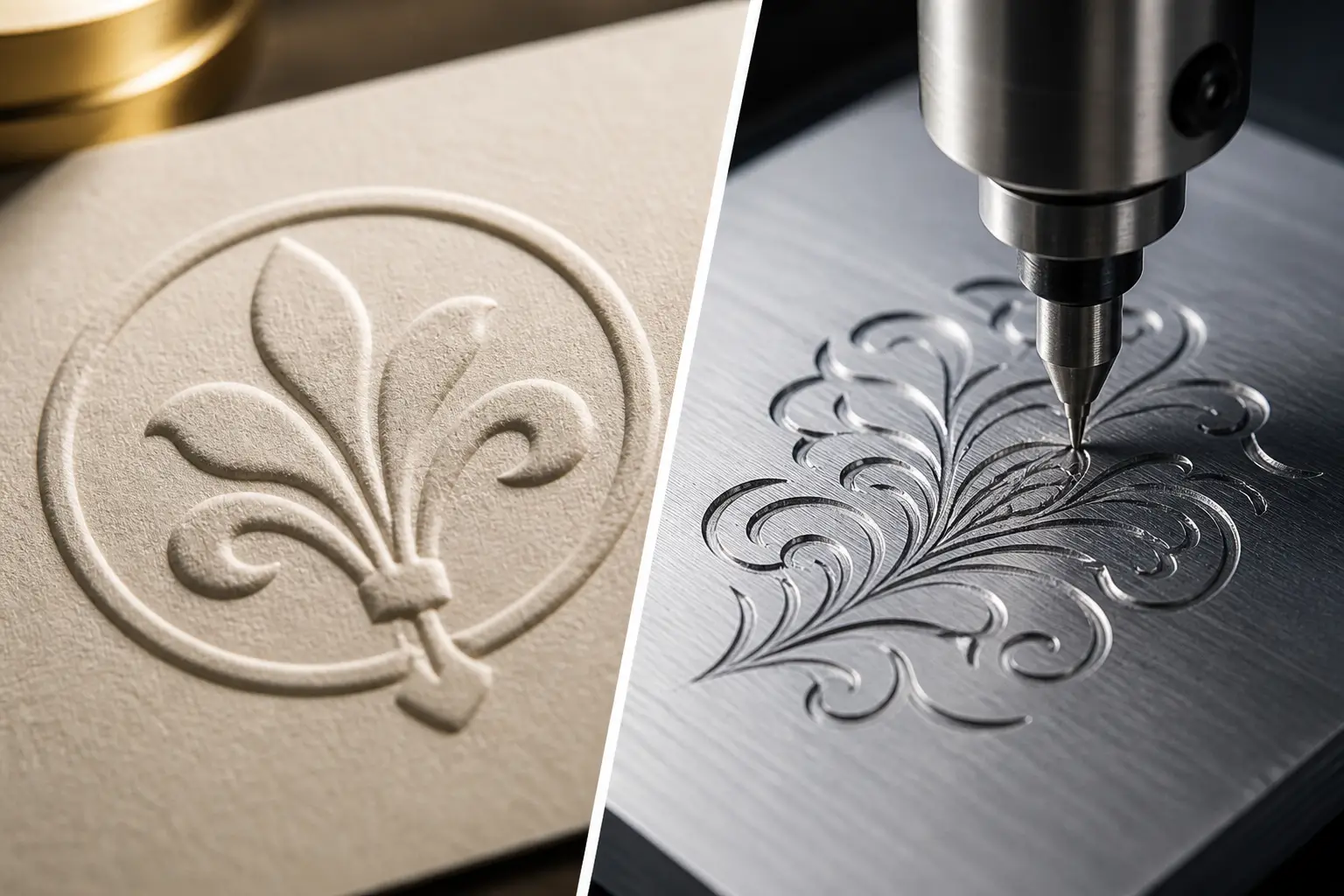
Embossing is a technique that raises a design above the surface of a material. It creates a three-dimensional, tactile effect without cutting into the material.
How embossing works:
- A metal die (stamp) presses the design into the material
- Pressure (and sometimes heat) is applied
- The material is pushed upward, forming a raised pattern
Common materials used:
- Paper and cardstock
- Leather
- Packaging materials (like cardboard)
- Some plastics
Key characteristics:
- Raised (3D) surface
- No material is removed
- Often paired with foil stamping for luxury finishes
Where embossing is commonly used:
- Business cards
- Book covers
- Luxury packaging
- Wedding invitations
- Branding elements
What is engraving and how does it work?
Engraving is the process of cutting or carving a design into a surface. Unlike embossing, it removes material to create depth.
How engraving works:
- A tool (manual or laser) cuts into the surface
- Material is removed, leaving recessed marks
- Depth can vary depending on technique
Types of engraving:
- Laser engraving (most common today)
- Mechanical engraving
- Hand engraving (traditional craftsmanship)
Common materials used:
- Metal (steel, aluminum, gold)
- Wood
- Glass
- Acrylic
- Stone
Key characteristics:
- Recessed (cut-in) design
- Permanent and highly durable
- Extremely precise detailing
Where engraving is commonly used:
- Jewelry and watches
- Trophies and awards
- Industrial parts
- Signage
- Personalized gifts
See Also: Engraving vs Etching vs Marking
What are the main differences between embossing and engraving?
Here’s a clear, side-by-side comparison:
| Feature | Embossing | Engraving |
|---|---|---|
| Surface effect | Raised (3D outward) | Recessed (cut inward) |
| Material removal | No | Yes |
| Depth | Shallow to moderate | Can be deep |
| Durability | Moderate | Very high |
| Cost | Lower (in bulk) | Higher (especially detailed work) |
| Precision | Moderate | High precision |
| Best for | Aesthetic & branding | Permanent marking & detail |
| Tools used | Dies and presses | Lasers or cutting tools |
Simple way to remember:
- Emboss = Raised
- Engrave = Carved
Which is better for branding and visual appeal?
Embossing is usually better for branding, especially in marketing and packaging.
Why embossing works well for branding:
- Creates a premium, tactile experience
- Enhances perceived value (widely reported in packaging studies)
- Subtle yet elegant—ideal for luxury brands
- Works well with minimalistic designs
Example:
Luxury brands often emboss logos on packaging to signal quality and sophistication without using ink.
When engraving is better for branding:
- When durability matters (e.g., metal tags, industrial labels)
- When fine detail or small text is required
Which option is more durable and long-lasting?
Engraving is significantly more durable than embossing.
Why engraving lasts longer:
- The design is cut into the material
- Resistant to wear, fading, and environmental damage
- Ideal for outdoor or heavy-use items
Embossing durability:
- Can flatten over time, especially on soft materials
- More suitable for visual impact than longevity
Verdict:
- Short-term visual appeal → Embossing
- Long-term durability → Engraving
What are the pros and cons of embossing?
Pros:
- Elegant, high-end appearance
- Cost-effective for bulk production
- Works well on paper and packaging
- No ink required (eco-friendly option)
Cons:
- Limited depth and detail
- Less durable over time
- Not suitable for hard materials like metal
What are the pros and cons of engraving?
Pros:
- Extremely durable and permanent
- High precision and detail
- Works on a wide range of materials
- Ideal for personalization
Cons:
- Higher cost (especially for custom work)
- Slower production time
- Less “soft” or subtle than embossing
When should you choose embossing vs engraving?
Choose embossing if:
- You want a luxury look for branding
- You’re working with paper or packaging
- You need cost-effective bulk production
- The design is simple and bold
Choose engraving if:
- You need permanent marking
- You’re working with metal, wood, or glass
- The design requires fine detail
- The product will face wear and tear
Real-world examples: Embossing vs engraving in action
Example 1: Business Cards
- Embossing → Premium feel, tactile branding
- Engraving → Rare, but used for metal cards
Example 2: Jewelry
- Embossing → Not commonly used
- Engraving → Standard for personalization
Example 3: Packaging
- Embossing → Luxury boxes, logos
- Engraving → Not practical for mass packaging
Example 4: Industrial Parts
- Embossing → Not suitable
- Engraving → Used for serial numbers and labels
Cost comparison: Which is more affordable?
Embossing:
- Lower cost per unit in bulk
- Initial die setup cost
- Ideal for large-scale production
Engraving:
- Higher cost per piece
- No need for dies (especially laser engraving)
- Better for small batches or custom work
FAQs
What is the main difference between embossing and engraving?
Embossing raises a design above the surface, while engraving cuts into the material to create a recessed design.
Is embossing more expensive than engraving?
No. Embossing is generally cheaper in bulk, while engraving tends to be more expensive due to precision and time.
Which lasts longer: embossing or engraving?
Engraving lasts longer because it removes material, making the design permanent.
Can you emboss metal?
It’s possible but less common. Embossing is mainly used for softer materials like paper and leather.
Is laser engraving better than traditional engraving?
Laser engraving is faster, more precise, and widely used today, making it the preferred modern method.
Which looks more premium: embossing or engraving?
Embossing often looks more premium in branding and packaging, while engraving looks more functional and precise.
Can you combine embossing and engraving?
Yes, in some advanced designs, both techniques can be combined for unique visual and tactile effects.
Final Verdict: Emboss vs Engrave
There’s no universal “better” option—it depends on your goal.
- Choose embossing for visual appeal, branding, and luxury packaging
- Choose engraving for durability, precision, and permanence
If your priority is how it feels and looks, go with embossing.
If your priority is how long it lasts, engraving is the clear winner.