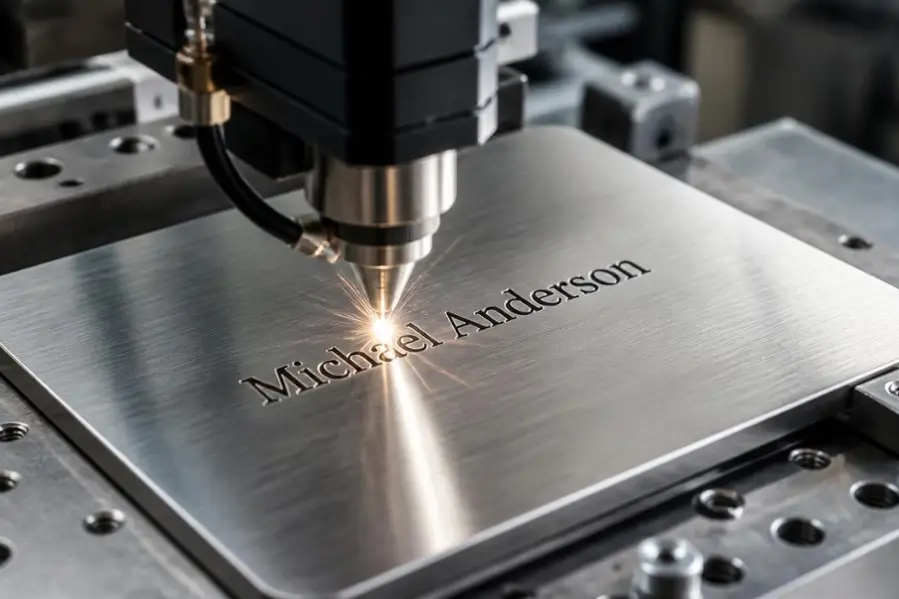

Metal engraving is one of the most popular applications for laser engraving technology. From personalized gifts and jewelry to industrial nameplates and branded products, engraving a name on metal creates a permanent, professional, and highly durable mark.
Unlike printed labels or stickers that can fade, peel, or wear away over time, engraved names become a lasting part of the material itself. Whether you’re creating custom products for customers or marking equipment for identification, understanding the correct engraving process helps ensure clean, readable, and long-lasting results.
In this guide, you’ll learn exactly how to engrave a name on metal, which metals work best, what equipment you need, and how to achieve professional-quality results.
Key Takeaways
- Laser engraving is the most precise and durable method for engraving names on metal.
- Stainless steel and anodized aluminum are among the best metals for clear, long-lasting engravings.
- Choosing a simple, readable font improves engraving quality and readability.
- Proper surface preparation, laser focus, and machine settings are essential for professional results.
- Running a test engraving before the final job helps prevent costly mistakes.
- Factors such as DPI, power, speed, and material type directly affect engraving quality.
- Laser-engraved names are permanent, wear-resistant, and ideal for personalization, branding, and industrial marking.
What Are the Different Ways to Engrave a Name on Metal?
Several methods can be used to engrave names on metal surfaces.
Common Metal Engraving Methods
| Method | Best For | Precision |
|---|---|---|
| Laser Engraving | Personalization, industrial marking | Excellent |
| Mechanical Engraving | Deep cuts, metal tags | Good |
| Chemical Etching | Decorative designs | Moderate |
| Rotary Engraving | Nameplates and signage | Good |
Today, laser engraving is the preferred option because it offers:
- High precision
- Fast production speeds
- Permanent marking
- Minimal material waste
- Consistent results
For most businesses and hobbyists, laser engraving provides the best balance of quality and efficiency.
Which Metals Can Be Engraved?
Not all metals react the same way during engraving.
Best Metals for Name Engraving
- Stainless Steel
- Anodized Aluminum
- Brass
- Copper
- Titanium
- Coated Metals
Engraving Considerations by Material
| Metal | Engraving Quality | Difficulty |
|---|---|---|
| Stainless Steel | Excellent | Medium |
| Anodized Aluminum | Excellent | Easy |
| Brass | Very Good | Medium |
| Copper | Good | Moderate |
| Titanium | Excellent | Advanced |
Anodized aluminum is especially popular because it produces crisp, high-contrast engravings that are easy to read.
What Equipment Do You Need to Engrave a Name on Metal?
The equipment required depends on the engraving method being used.
Basic Requirements
- Laser engraving machine
- Design software
- Metal workpiece
- Safety glasses
- Proper ventilation
Many professionals use fiber lasers for bare metals, while CO₂ lasers are commonly used for coated metals and anodized aluminum.
The right machine settings will vary based on the metal type, thickness, coating, and desired engraving depth.
How Do You Prepare a Name for Metal Engraving?
Preparation is one of the most important steps in the engraving process.
Step 1: Choose an Engraving-Friendly Font
Simple, readable fonts typically produce the best results.
Popular choices include:
- Arial
- Helvetica
- Montserrat
- Roboto
- Futura
Avoid fonts with:
- Extremely thin lines
- Excessive decorative details
- Tight spacing
Clear typography helps maintain readability even when engraving small names.
Step 2: Create or Import Your Design
Using design software, type the name exactly as it should appear.
Before engraving:
- Check spelling carefully
- Confirm font size
- Verify alignment
- Convert text to vector paths if required
Step 3: Position the Artwork
Centering the name properly helps create a professional appearance.
Most laser software includes alignment tools that make positioning quick and accurate.
What Is the Step-by-Step Process for Engraving a Name on Metal?
Step 1: Clean the Metal Surface
Remove:
- Dust
- Oil
- Fingerprints
- Protective residue
A clean surface improves engraving consistency and reduces defects.
Step 2: Secure the Metal
Place the metal securely inside the engraving machine.
Movement during engraving can ruin the design and reduce accuracy.
Step 3: Focus the Laser
Proper focus is critical.
An incorrectly focused laser can produce:
- Blurry text
- Uneven engraving
- Reduced contrast
Most modern laser systems include autofocus features to simplify setup.
Step 4: Configure Machine Settings
Adjust settings such as:
- Power
- Speed
- Frequency
- DPI
- Dot duration
The ideal settings depend on the specific metal being engraved.
Step 5: Run a Test Engraving
Experienced engravers almost always perform a test before engraving the final product.
Testing helps verify:
- Contrast
- Readability
- Depth
- Alignment
This small step can prevent costly mistakes.
Step 6: Begin Engraving
Once settings are verified, start the engraving process.
The laser will permanently mark the name onto the metal surface according to the design file.
Step 7: Inspect the Finished Piece
After engraving:
- Check readability
- Verify spelling
- Inspect contrast
- Confirm placement
Minor adjustments can then be made for future projects.
What Factors Affect Engraving Quality?
Several variables influence the final result.
Key Factors
Font Selection
Simple fonts generally produce cleaner engravings than highly decorative styles.
Material Type
Different metals react differently to laser energy.
DPI Settings
Higher DPI settings often improve detail, especially for small text and fine lettering.
Laser Focus
Proper focus ensures sharp edges and consistent marking.
Machine Calibration
Regular maintenance helps maintain engraving quality and repeatability.
When all of these factors work together, engraved names appear sharper, cleaner, and more professional.
What Are Common Mistakes When Engraving Names on Metal?
Beginners often encounter avoidable issues.
Common Errors
- Choosing fonts that are too small
- Using excessive laser power
- Skipping test engravings
- Engraving on dirty surfaces
- Incorrect focus settings
- Poor artwork alignment
Avoiding these mistakes can significantly improve results and reduce material waste.
What Are the Best Uses for Metal Name Engraving?
Metal name engraving is used across many industries.
Popular Applications
- Personalized gifts
- Pet tags
- Jewelry
- Awards and trophies
- Industrial identification plates
- Corporate branding
- Tool marking
- Equipment labels
Because engraved markings are durable and professional-looking, they remain one of the most trusted identification methods available today.
Ready to Create Professional Metal Engravings?
Engraving a name on metal is a straightforward process when you use the right equipment, materials, and settings. From selecting an appropriate font to optimizing machine parameters, each step contributes to a cleaner and more professional result.
At Thunder Laser USA, we provide advanced laser engraving solutions, expert resources, and practical guidance to help businesses, makers, and manufacturers achieve outstanding engraving results on metal and other materials.
Conclusion
Metal name engraving offers a permanent, professional, and highly durable marking solution for countless applications. Whether you’re engraving stainless steel nameplates, anodized aluminum tags, custom jewelry, or branded products, success comes down to preparation, proper settings, and material selection.
By following the steps outlined in this guide, you can consistently produce sharp, readable, and long-lasting engravings that look professional and stand the test of time.
Related Read
- What Is Dot Duration in Laser Engraving?
- How Much to Charge for Laser Engraving
- Which Materials Are Not Suitable for Laser Cutting and Engraving?
Frequently Asked Questions
What is the best metal for engraving names?
Anodized aluminum and stainless steel are among the most popular choices because they produce clear, durable engravings.
Can a CO₂ laser engrave metal?
CO₂ lasers can engrave coated metals and anodized aluminum, while fiber lasers are generally preferred for bare metals.
What font works best for engraving names on metal?
Simple fonts such as Arial, Helvetica, and Montserrat typically provide the best readability.
How deep should a metal engraving be?
The ideal depth depends on the application, but most name engravings prioritize readability over deep cutting.
Is laser engraving permanent on metal?
Yes. Properly engraved metal markings are highly durable and resistant to fading or wear.
Can small names be engraved clearly?
Yes, provided the correct font, DPI, focus, and machine settings are used.
Do I need a fiber laser to engrave metal?
For most bare metal engraving projects, a fiber laser provides the best results. However, anodized aluminum and coated metals can often be engraved successfully with a CO₂ laser.