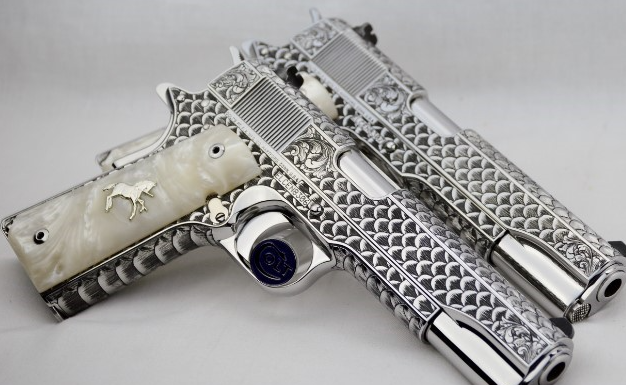

Laser engravers give gun owners a precise way to add custom details to their firearms. Names, logos, serial numbers, and patterns can be permanently marked with clean lines and high accuracy.
This method works well on metal parts like slides and receivers. Fiber lasers are especially suited for firearm engraving because they can handle tough materials without damaging the surface.
Whether for personal use, branding, or legal marking, laser engraving offers a reliable way to customize guns with lasting results.
Understanding Laser Engraving for Firearms

Laser engraving offers significant advantages in precision and speed compared to traditional engraving methods. It is essential for gun owners and manufacturers to understand the implications of these techniques as they relate to functionality and legal responsibilities.
1. Laser Engraving Vs. Traditional Methods
Laser engraving offers high precision and consistency. It uses a focused beam of light to mark designs on firearms. This creates clean, uniform results that improve the appearance and value of the gun.
Unlike manual engraving, lasers can handle complex patterns and detailed text with ease. The process is fast and accurate, making it ideal for both custom jobs and bulk production.
Traditional engraving may appeal to those who want a handmade look, but it takes more time and can lead to mistakes. For legal markings or detailed designs, laser engraving is often the better option.
2. Legal Considerations
When engraving guns, it’s important to follow legal rules. The National Firearms Act (NFA) requires firearms to have proper markings like serial numbers and clear identification.
These markings must be permanent and easy to read. Laser engravers meet these standards by creating sharp, durable engravings. Both gun owners and manufacturers must keep accurate records for legal tracking.
Always check local and federal laws before engraving a firearm. Staying informed helps avoid legal trouble and ensures full compliance.
Types of Laser Engravers for Guns

Different types of laser engravers are suited for various materials and applications when it comes to engraving guns. Primarily, there are two prominent technologies: fiber laser engravers and CO2 laser engravers. Each has its unique strengths and ideal use cases.
1. Fiber Laser Engravers
Fiber laser engravers utilize a solid-state laser that generates light through optical fibers. This technology is particularly effective for marking harder materials like metals, making it suitable for firearms.
Key features include:
- Precision: They provide high-resolution engravings with impressive detail, perfect for intricate designs.
- Speed: Fiber lasers operate at faster engraving speeds compared to other technologies.
- Durability: These engravers have a long lifespan and require less maintenance.
The wattage for fiber lasers typically ranges from 25 to 80 watts, ensuring deeper engraving for metallic surfaces. For those seeking a professional-grade tool, a fiber laser engraver stands out as an essential investment for high-quality gun engravings.
2. CO2 Laser Engravers
CO2 laser engravers utilize carbon dioxide gas to generate the laser beam. This type is best for engraving softer materials, such as wood and plastics, which may also be found in gun accessories.
Highlighting features include:
- Versatility: Suitable for various materials beyond metal, making it a more versatile option.
- Ease of Use: Many CO2 engravers come as desktop laser engravers, suitable for both hobbyists and professionals.
- Cost-Effectiveness: Generally, CO2 laser engravers have a lower initial investment compared to fiber systems.
They are ideal for applications focused on aesthetic designs, like decorative carvings on wooden grips. The choice between fiber and CO2 laser engravers heavily depends on the specific engraving needs and the materials involved.
Factors to Consider When Choosing a Laser Engraver

Selecting the right laser engraver involves careful consideration of several key factors that directly impact the quality and efficiency of engraving. The engraving area, machine specifications, software compatibility, and durability are critical aspects to evaluate before making a purchase decision.
1. Engraving Area and Materials
The engraving area is a primary factor that affects the size of the projects one can undertake. For firearms, this aspect is crucial as it determines what parts can be engraved.
A larger engraving area allows for more flexibility, especially for larger items. Standard sizes often range from 12″ x 20″ to 24″ x 36″.
When considering engraving materials, common choices are metals like aluminum and stainless steel, as well as more intricate designs on wood.
Proper compatibility with various materials will ensure high-quality results and reduce the risk of damage to both the material and the machine.
2. Machine Specifications
Specifications of the laser engraver include power output, type of laser, and speed settings.
Power output typically ranges from 30 watts to over 100 watts. Higher wattage can cut through thicker materials faster but may also require a better cooling system.
The type of laser—CO2 or fiber—determines the types of materials it can effectively engrave. CO2 lasers excel with organic materials, while fiber lasers are optimal for metals.
Additionally, consideration of speed settings is important as they allow for adjustments based on the material and desired detail of the engraving.
3. Software Compatibility
Compatibility with engraving software is essential for efficient and precise operations. Many laser engravers support popular software programs like LightBurn.
LightBurn offers user-friendly interfaces and advanced settings, allowing for intricate designs and adjustments.
Before purchasing, it’s vital to confirm that the chosen machine seamlessly integrates with the preferred software.
Ensuring compatibility can enhance workflow and minimize technical issues that may arise during projects.
4. Durability and Maintenance
Durability of the laser engraver plays a crucial role in long-term performance. Machines built with high-quality materials tend to withstand regular use better.
A well-constructed engraver will require less frequent repairs and can last for years with proper maintenance.
Routine maintenance considerations should include lens cleaning, alignment checking, and software updates.
Most manufacturers offer warranties that can also aid in long-term support, but potential buyers should review maintenance requirements and costs prior to purchase.
This ensures a satisfactory return on investment and the ability to conduct projects without interruptions.
Applications of Gun Laser Engraving
Gun laser engraving serves multiple purposes, enhancing both functionality and aesthetics. This technology allows for precise markings, offering customization options that meet personal and regulatory needs. Below are key applications of gun laser engraving.
1. Custom Personalization
Custom personalization is one of the most sought-after applications of laser engraving on firearms. Owners can imprint initials, names, or unique symbols on their guns, making each firearm distinctly their own.
This process not only adds a personal touch but can also increase the emotional value attached to the weapon. Many enthusiasts opt for personalized engravings to commemorate special occasions or achievements.
The precision of laser engravers ensures that intricate designs are executed flawlessly, providing a professional finish. Such customization has become increasingly popular in the gun community for both handguns and rifles.
2. Serial Number Engraving
Serial number engraving is a critical application for firearm identification and traceability. Regulatory authorities require unique serial numbers on all guns, and laser engraving offers a permanent solution.
This method provides clear, legible markings that are resistant to wear and corrosion. As laws evolve, ensuring firearms are easily identifiable is essential for compliance and safety.
Moreover, laser engraving serial numbers minimizes the risk of alterations or damage, making it preferable over traditional methods. This level of durability is particularly crucial for gun manufacturers and dealers.
3. Artistic and Aesthetic Designs
Artistic and aesthetic designs add significant value to firearms, appealing to collectors and enthusiasts alike. Laser engraving allows for the incorporation of intricate patterns, scenes, or themes that elevate the visual appeal of a gun.
Engravers can craft detailed artwork that reflects personal tastes or historical motifs, enhancing the firearm’s overall aesthetic. The process accommodates various materials, enabling designs on wood stocks, metal surfaces, and more.
This combination of functionality and artistry makes laser engraving increasingly popular, especially for custom builds and limited edition releases. Such designs often transform standard firearms into collectible pieces.
Practical Insights for Hobbyists and Professionals

When engaging in laser engraving for firearms, both hobbyists and professionals must navigate various important factors. From budgeting for equipment to ensuring proper training and safety, each aspect plays a crucial role in achieving high-quality results.
1. Cost Considerations and Budgeting
Investing in a laser engraver can vary significantly based on quality and capabilities. For hobbyists, entry-level models may start around $2,000, while advanced options for professionals can exceed $10,000.
Additionally, it’s essential to account for ongoing costs such as maintenance, materials, and software.
- Accessories: Items like rotary attachments or specialized lenses can add $300 to $1,000 to the initial investment.
- Materials: Different materials will also impact overall costs; for example, engraving wood versus metal can require different approaches and tools.
Hobbyists should carefully assess their budget to ensure they select a machine that meets their needs without overspending.
2. Safety and Training
Safety should always be a priority when using laser engravers. Proper training in operating the equipment is vital to prevent accidents and ensure high-quality results.
Key safety tips include:
- Protective Gear: Always wear protective eyewear designed for laser use.
- Ventilation: Ensure a well-ventilated workspace to avoid inhaling harmful fumes generated during engraving.
Professionals typically undergo formal training programs to familiarize themselves with appropriate techniques. It is equally beneficial for hobbyists to seek out online courses or workshops focused on safe laser engraving practices. This commitment to safety not only protects the user but enhances the engraving outcomes.
3. Finding a Local Professional Engraver
For those who prefer not to invest in a laser engraver, seeking a local professional engraver can be an excellent option. This approach allows enthusiasts to benefit from experience without the initial costs of equipment.
When searching for a professional engraver, consider:
- Reputation: Look for reviews and recommendations from other firearm enthusiasts.
- Portfolio: A strong portfolio showcasing previous work will indicate the engraver’s skill level.
- Pricing: Understand the cost structure, which may vary based on the complexity of the design.
Utilizing local resources may reveal options for gun laser engraving services, potentially saving time and ensuring quality craftsmanship.
Conclusion
Laser engraving gives gun owners and professionals a reliable way to add precision, personalization, and compliance to firearms. Whether it’s marking serial numbers, adding artistic details, or customizing for personal value, the right laser engraver makes all the difference. Understanding your needs, legal rules, and machine options ensures you get high-quality, lasting results.
Ready to upgrade your firearm engraving?
Explore advanced and reliable laser engravers at Thunder Laser USA, built for precision, durability, and professional customization.
Frequently Asked Questions
What factors determine the cost of gun laser engraving services?
The cost of gun laser engraving services is influenced by several key factors. These include the complexity of the design, the type of firearm, and the material being engraved. Additional costs may arise from the intricacy of the engraving or if special features like depth marking are required.
How do you choose the appropriate laser engraver for firearm customization?
Selecting the right laser engraver involves considering the machine’s power, precision, and versatility. A higher wattage typically means better engraving on tougher materials. It’s also important to assess user experience and whether the machine can handle specific designs or requirements.
Are there any legal considerations for laser engraving firearms?
Legal considerations for laser engraving firearms vary by jurisdiction. Generally, it is permissible as long as it complies with local and federal regulations. Ensuring that any engravings, especially serial numbers, meet ATF guidelines is crucial to remain compliant.
What are the capabilities of a 20W fiber laser for gun engraving?
A 20W fiber laser provides sufficient power for detailed engraving on metals commonly used in firearms. It offers a good balance of speed and precision, allowing for clear designs without damaging the firearm’s surface. Such lasers are suitable for both simple and intricate patterns.
What options are available for small-scale laser engravers applicable to gun projects?
Small-scale laser engravers vary in capability but often include desktop models suited for hobbyists. These machines may have lower power but can still perform clear engravings on smaller firearms or accessories, making them ideal for personal projects.
What are some popular patterns and designs for custom gun laser engraving?
Popular designs for custom gun laser engraving include logos, images, and ornamental patterns. Common themes may encompass patriotic symbols, intricate geometric shapes, or personal monograms. Each design enhances the firearm’s aesthetic while allowing for personalization.