Education & Makerspaces
Bring Industrial-Grade Fabrication to Every Classroom
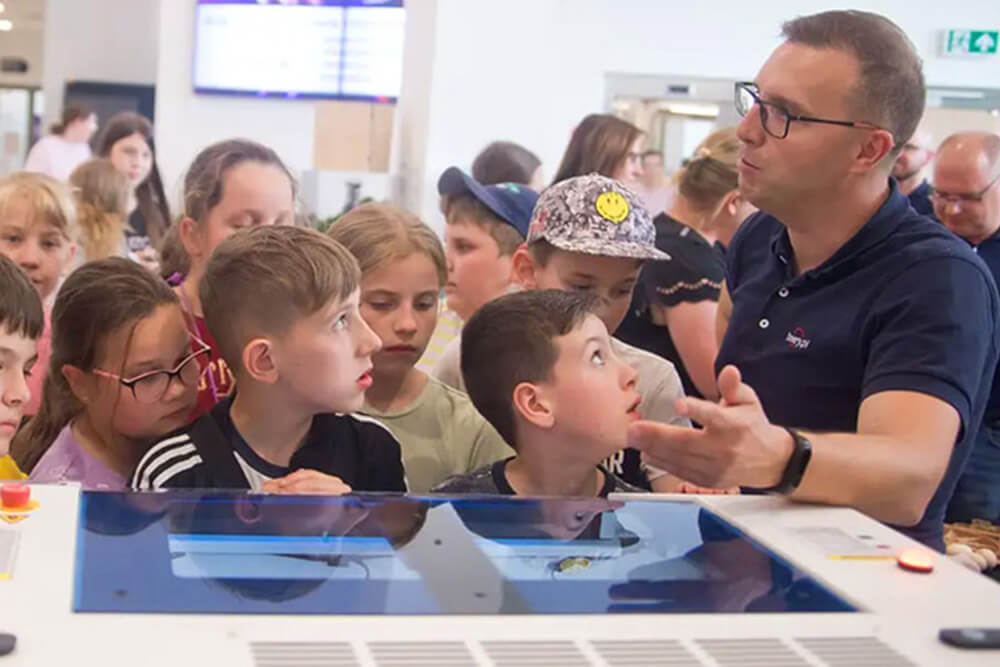
Transform your educational space into a professional makerspace. Thunder Laser’s industry-standard laser cutters and fume extraction solutions make laser fabrication accessible to any school, university, library, or program—without the need for external venting, wall modifications, or building code headaches.
The Only Industrial Laser Cutters Priced for Education
Thunder Laser costs 50–75% less than Epilog, Trotec, and Universal Laser Systems—while delivering the same professional quality, larger cutting areas, and longer-lasting tubes. Give your students the real tools used in manufacturing, aerospace, and creative industries, without crushing your budget.
Six Reasons Educators Choose Thunder Laser

1. Removing the Ventilation Problem
The #1 barrier to laser adoption in schools is external ventilation. Many classrooms are interior rooms with no windows. Building modifications take 6–18 months and cost $5,000–$20,000. Thunder Air and Filtrabox fume extractors eliminate this entirely—recirculating clean air with zero external ducting. Plug in and teach.
2. Safety-First Design
All Thunder Laser machines feature Class 1 or Class 4 certification, safety interlocks, emergency stop buttons, and fully enclosed cutting chambers. The Titan series is Class 1 certified—inherently safe for K–12 classrooms under all normal use conditions.
3. Cross-Curricular Impact
One laser cutter serves seven departments: Math (geometry & precision), Science (materials & physics), Art (design & creativity), Engineering (prototyping & iteration), Entrepreneurship (student businesses & products), CTE (industry-ready skills), and History (models & dioramas). Maximize ROI by sharing one tool across campus.
4. 50–75% Less Than Competitors
Nova Plus 35 (perfect classroom size): ~$12,000. Equivalent Epilog Zing: ~$30,000. Equivalent Trotec: ~$35,000. Thunder Laser delivers professional-grade fabrication at school budgets that don’t require a Perkins V grant.
5. Industry-Ready Skills
Students train on the exact same machines used in manufacturing plants, aerospace labs, tactical gear facilities, and creative studios. Thunder Laser isn’t a toy—it’s professional equipment that teaches students the real-world skills employers demand.
6. Proven in Education (200+ Schools Worldwide)
University of Calgary (Schulich School of Engineering), Michigan State University (Hollander Makerspace), Johns Hopkins, Cal State Fullerton, and hundreds of K–12 schools, community colleges, and libraries trust Thunder Laser. We speak your language.
Wherever Students Learn, We Belong
K–12 Schools
Universities
Trade Schools
Makerspaces
Science Centers
The Right Machine for Your Program
Classroom Workhorse
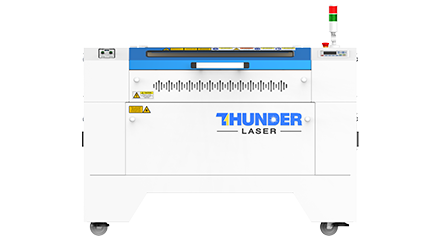
Nova Plus 35
Perfect for high school STEM labs, middle school maker programs, art departments, and small maker studios.
Power
60W or 80W RF tube
Speed
2000mm/s
Area
24″ × 15.7″
Investment
$12,000–$15,000
University Lab Standard
Nova Plus 51
Ideal for engineering design labs, architecture programs, and large fabrication projects. Handles full-size poster boards, large acrylic sheets, leather panels.
Power
80-120W RF CO2
Speed
up to 1,200mm/s
Area
40″ × 24″
Investment
$18,000–$22,000
Advanced Manufacturing & CTE
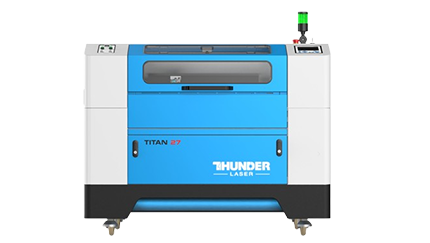
Titan 27 or 51
Perfect for advanced manufacturing programs, engineering capstones, and professional workforce training. Processes metals, composites, and organics.
Power
PREMIUM RF LASER TUBE
Speed
up to 3000mm/s
Area
Up To 51″ × 35″
Investment
$16,000–$35,000
Trade Schools & Metalwork
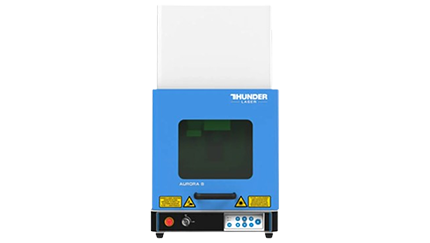
Aurora
Ideal for jewelry design, metalworking, and technical programs.
Power
Fiber laser for metal marking
Speed
7,000mm/s
area
5.9″ x 5.9″
Investment
$8,000–$15,000
The Next Generation of Learning Is Happening Now
K-12 Stem Education Market
$49.9B
Growing 13.8% annually
K–12 makerspace
$1.1B
Growing to $1.53B by 2029
Public libraries
1,000+
US public libraries now operate makerspaces
Engineering programs
80%+
Of US programs include makerspace equipment
How to Solve The Budget Problem
Federal Grants
- Perkins V: $1.35B/year for CTE equipment (career & technical schools)
- IMLS (Institute of Museum & Library Services): Direct funding for library & museum makerspaces
- Title IV-A (ESSA): Student Support & Academic Enrichment Grants
- NSF (National Science Foundation): Research & education equipment grants
Accessible & Crowdfunded
- DonorsChoose.org: $1K–$10K teacher-specific equipment grants
- State CTE funds (typically 50% match)
- PTA/PTO fundraising initiatives
FAQs
Do we really not need external ventilation?
Yes, really. Thunder Air and Filtrabox fume extractors recirculate 99.9% clean air back into your classroom. No ductwork, no wall penetrations, no building modifications. Plug into a standard outlet and teach.
Is a laser cutter safe for students to use?
Absolutely. All Thunder Laser machines feature safety interlocks (machine won’t fire if the lid is open), emergency stop buttons, and fully enclosed cutting chambers. The Titan series is Class 1 certified—inherently safe under all normal use. We recommend a designated laser safety officer for proper training, just like any shop equipment.
How do we integrate this into our curriculum?
Laser cutters fit seamlessly into STEM (prototyping, engineering challenges), art (design, engraving), entrepreneurship (student product creation), and even history (models, dioramas). We provide a free curriculum guide with 30+ cross-curricular project ideas.
How do we pay for it?
Perkins V grants, IMLS grants (for libraries), Donors Choose, Title IV-A funds, PTA fundraising, and equipment bond measures all work. We provide grant-writing resources and can help you identify which programs fit your school type and budget.
How much maintenance is required?
Minimal. Regular filter changes (every 3–12 months depending on use), tube cleaning (quarterly), and mirror alignment (annually). Most schools dedicate 2–4 hours per month to machine maintenance. We provide full support and tutorials.
How do students get trained to use the machine?
We provide a comprehensive educator’s training program, safety certification materials, and step-by-step video tutorials. Most schools train a ‘laser tech’ staff member or designate 2–3 advanced students as certified operators. We recommend 4–6 hours of initial training before student use.
Get Started
Request an Education Quote
Get a customized proposal for your school type & budget