
One of the hardest parts of running a laser engraving business is pricing. Charge too little and you burn out while making no profit. Charge too much and customers hesitate or go elsewhere. Many beginners copy prices they see online without understanding whether those prices are actually profitable.
This guide breaks down how much to charge for laser engraving, what factors affect pricing, and how to build prices that are fair, competitive, and sustainable.
Key takeaways
- Laser engraving prices vary based on material, time, and complexity
- There is no single fixed price that works for every job
- Machine time and design work should always be priced in
- Bulk orders should be cheaper per item but profitable overall
- Underpricing is the most common mistake new engravers make
- Consistent pricing leads to sustainable profit
Why laser engraving pricing is not one size fits all
There is no single correct price for laser engraving. Prices vary widely because engraving jobs differ in material, time, complexity, and customer expectations.
A small logo on wood is not priced the same as a custom photo engraving on metal. Local craft markets, online stores, and corporate clients also have very different price tolerances.
The goal is not to be the cheapest. The goal is to be profitable and consistent.
The most common ways laser engravers charge
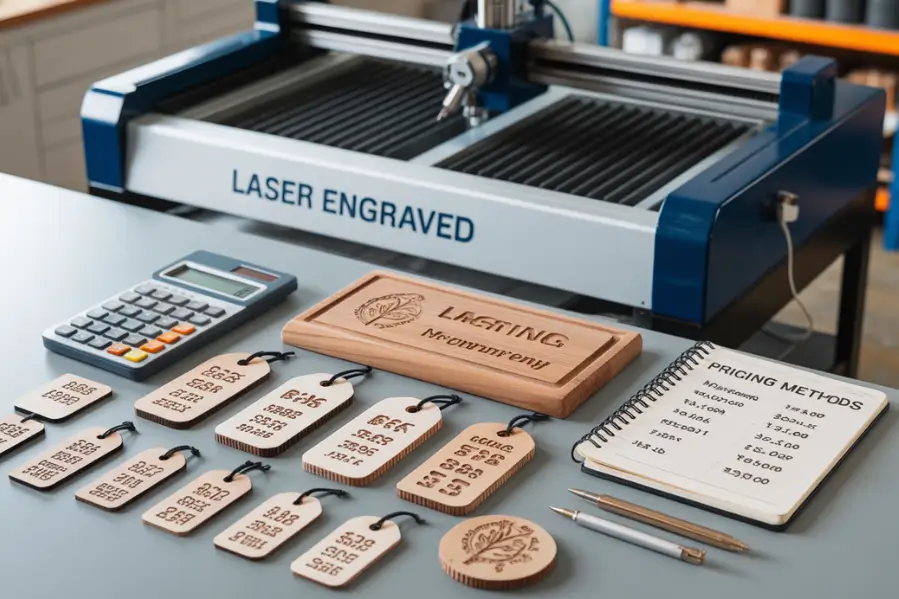
Laser engraving businesses usually price jobs using one or more of these methods.
Charging per item
This is the most common method for gifts and small products.
Examples
- One engraved cutting board
- One engraved tumbler
- One engraved keychain
The price includes engraving time, setup, and basic material handling.
This method works best for standardized products.
Charging per minute or per hour
This method is common for custom or variable jobs.
Typical hourly ranges
- Beginner or hobby level: lower range
- Professional shop with overhead: higher range
You calculate how long the job takes, then multiply by your rate.
This method is useful for
- Custom designs
- One off projects
- Industrial or technical engraving
Charging per square inch
Some engravers price by engraving area.
For example
- Small area costs less
- Large engravings cost more
This method is often used for signage, plaques, or flat items.
Charging per project
This is common for branding, bulk orders, or corporate work.
You provide one fixed price based on the full scope of work rather than individual items.
Typical laser engraving price ranges
These are realistic starting ranges, not hard rules.
Small items
Examples
- Keychains
- Tags
- Small logos
Typical price range
Low to mid range per item, depending on material and quantity
Cutting boards and wood products
Examples
- Personalized cutting boards
- Wooden signs
Typical price range
Mid range for simple text
Higher for custom layouts or large engravings
Tumblers and drinkware
Examples
- Stainless steel tumblers
- Water bottles
Typical price range
Mid to higher range per item
Rotary engraving often costs more
Metal engraving
Examples
- Anodized aluminum
- Brass or steel with marking spray
Typical price range
Higher than wood due to prep time and materials
Photo engraving
Examples
- Wood photos
- Slate photos
Typical price range
Higher due to design prep and longer engraving time
Factors that should always affect your pricing
If you ignore these, you will undercharge.
Material cost
Include
- Raw material cost
- Waste and test pieces
- Marking sprays or coatings
Never price as if materials are free.
Machine time
Laser time matters.
Longer engraving means
- More electricity
- More wear on the machine
- Less capacity for other jobs
Even if you are working from home, machine time has value.
Design and setup time
Customers often think engraving is instant. It is not.
Design time includes
- Layout and formatting
- File cleanup
- Test engravings
Always charge for custom design work.
Skill and experience
You are not charging just for machine time. You are charging for knowing what settings work and how to avoid mistakes.
Experience reduces failures. That has value.
Order quantity
Single items cost more per unit. Bulk orders cost less per unit but more overall.
Always reward quantity without undercutting yourself.
A simple pricing formula you can actually use
Here is a practical approach many small shops use.
- Set an hourly rate you want to earn
- Estimate total time including setup
- Add material cost
- Add a profit margin
- Round to a clean price
Example logic
Hourly value + material cost + profit buffer
This keeps pricing consistent and scalable.
How beginners usually underprice laser engraving
Common mistakes include
- Copying Etsy prices without knowing costs
- Charging only for laser run time
- Ignoring failed pieces
- Not charging for design work
- Trying to compete on price instead of value
Underpricing leads to burnout faster than low sales.
How to price laser engraving for Etsy or online stores
Online pricing needs to account for more than engraving.
Include
- Platform fees
- Payment processing fees
- Packaging
- Customer service time
Online prices are often higher than local pickup prices for this reason.
How to price laser engraving for local customers
Local customers value speed and customization.
You can often charge more for
- Same day service
- Local personalization
- Custom requests
Do not discount just because the customer is local.
How to price laser engraving for businesses and bulk orders
Businesses expect
- Clean results
- Consistency
- Invoices
- Deadlines
They also expect volume pricing, not cheap pricing.
Offer
- Per unit discounts for quantity
- Setup fees for custom logos
- Clear minimum order values
Should you charge setup fees?
Yes, especially for custom jobs.
Setup fees cover
- File preparation
- Test runs
- Machine setup
Setup fees prevent small custom jobs from wasting your time.
How to raise prices without losing customers
Raising prices is part of growth.
You can raise prices by
- Improving presentation and branding
- Offering better packaging
- Reducing discounts
- Increasing minimum order values
Customers leave because of unclear value, not because of fair pricing.
Is laser engraving a profitable business?
Yes, if priced correctly.
Laser engraving becomes unprofitable when
- Prices are based on fear
- Costs are ignored
- Time is undervalued
Profitable shops focus on repeat customers, efficient workflows, and consistent pricing.
Final thoughts on how much to charge for laser engraving
Laser engraving pricing is about balance. You must cover your costs, respect your time, and charge based on value, not insecurity.
If you price thoughtfully, laser engraving can be a sustainable and scalable business, whether you sell locally, online, or to other businesses.
If you are running or planning a laser engraving business, these related guides may also be helpful.
- Laser engraved cutting board ideas that sell
- How to Make Money with a Home Laser Engraving Business
- What is DPI in laser engraving and how it affects quality
- How to Grow Your Laser Engraving Business
- What is dot duration in laser engraving explained
- Laser Engraving Business Ideas
These articles help you improve engraving quality, efficiency, and profitability.
Frequently Asked Questions
How much should I charge per hour for laser engraving?
Most small laser engraving businesses charge an hourly rate that covers machine time, labor, and overhead, then adjust per job based on complexity.
How do you price custom laser engraving?
Custom laser engraving should include design time, setup time, material cost, machine time, and a profit margin.
Is laser engraving profitable?
Yes. Laser engraving can be profitable when prices are set to cover time, materials, and machine wear rather than competing on low prices.
Should I charge a setup fee for laser engraving?
Yes. Setup fees help cover file preparation, testing, and machine setup, especially for one off or custom jobs.
Why is laser engraving pricing so different between sellers?
Prices vary due to differences in experience, machine costs, materials, overhead, and local market demand.
How to calculate laser engraving cost?
To calculate laser engraving cost, add together your material cost, machine time, labor or design time, and overhead, then include a profit margin.
A simple way to calculate it is:
1. Calculate total engraving time including setup
2. Multiply time by your hourly rate
3. Add material and consumable costs
4. Add design or setup fees if needed
5. Include a profit buffer
This method ensures you cover costs and price consistently instead of guessing.