
SAMPLE 4825
Disclaimer
Any substrate you plan to use should have data on it if you are unsure. Some materials 'can' be processed with 10600nm wavelength CO2 but that doesn't always mean you should.
Overview
A client wants to process ABS and HDPE on a Thunder Laser USA CO2 laser. We are going to explore the data to see if it is even suitable to do so. Many of these materials produce deadly and corrosive byproducts when lased, and some are poor candidates for laser cutting and engraving, even if it is marginally safe.
Materials To Be Tested
We were sent 2 types of materials for testing. Here is the information on each type of material. There are material datasheets and safety datasheets attached at the end of the article for your reference. The material data is from the manufacturer. The Material Safety Data Sheets (MSDS) originate from another company.
NOTE: Since we are not reinventing the wheel here, many of the resources could be 'generic' public domain kinds of stuff
ABS
More about acrylonitrile butadiene styrene: https://en.wikipedia.org/wiki/Acrylonitrile_butadiene_styrene

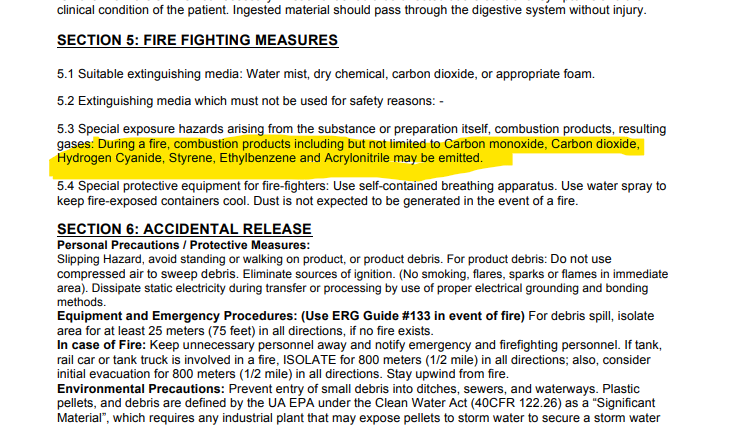
This material produces some nasty stuff when lased:
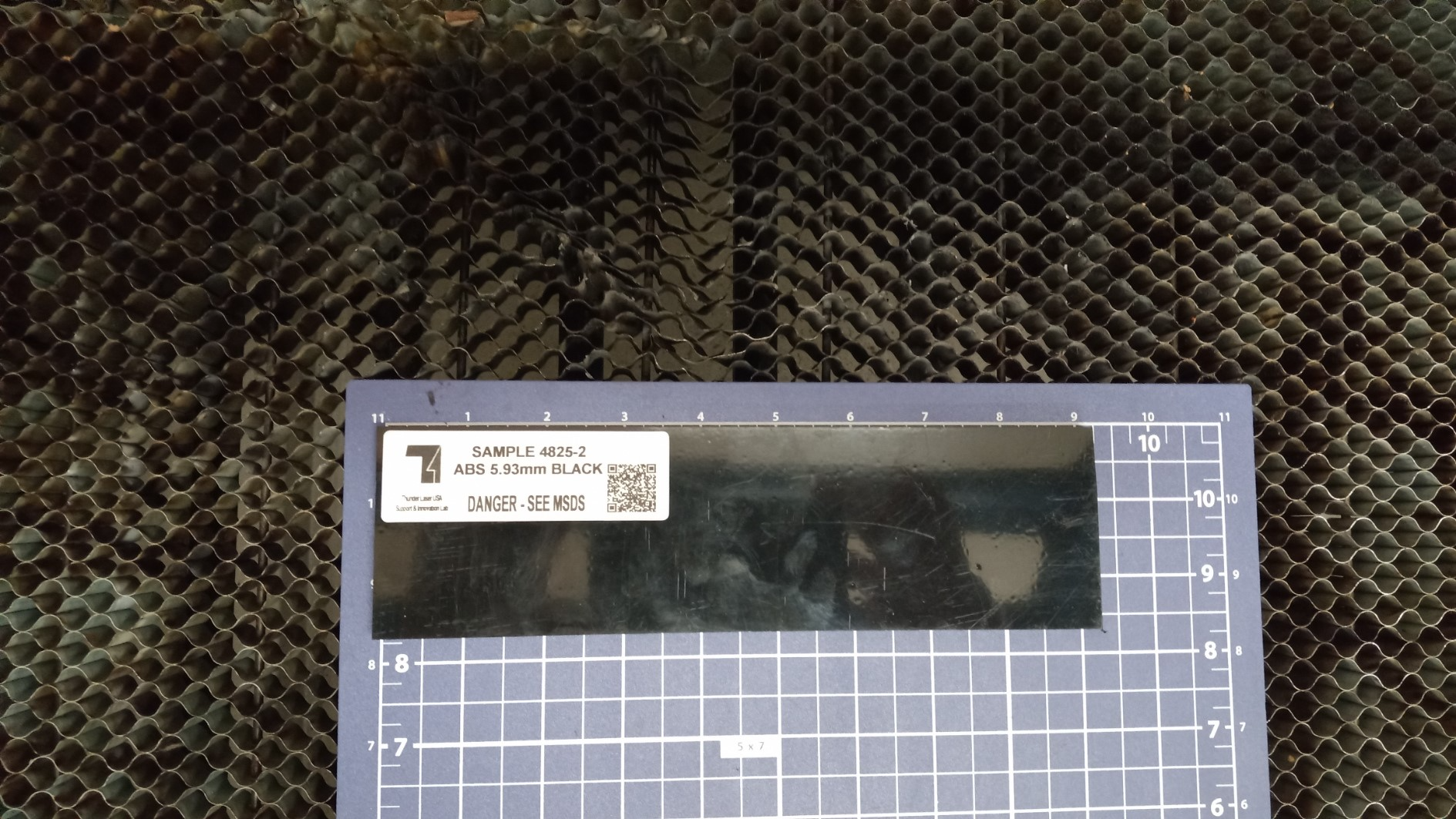
SAMPLE 4825-2 ABS 5.93mm BLACK
HDPE
More about high-density polyethylene: https://en.wikipedia.org/wiki/High-density_polyethylene

SAMPLE 4825-1 HDPE 6.47mm WHITE


THIS SAMPLE TEST HAS BEEN DETERMINED TO PRODUCE UNDESIRABLE LEVELS OF CONTAMINANTS AND HAS BEEN TERMINATED. END.
Still stuck?
Fastest response times in the industry from our US-based support team.